When the treasure hunters of Qara-su Valley brought word of a cave discovered high on the mountain, in which a seated monk had been seen, the whole region was suddenly astir. The tale gained weight as it passed from mouth to mouth, from village to village, carrying the hunters’ own rumours: the monk was no mummified corpse or shattered skeleton, but a man of flesh and blood, like you or me.
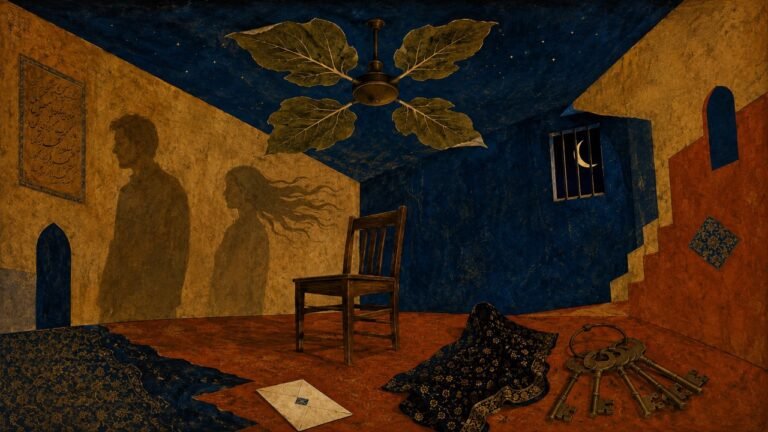
Mirza Hasan, one of those who had entered the cave, recounted it in a quiet voice. ‘I saw him with my own eyes. Had I not, I would never have believed it. We drove for an hour into the mountains, then climbed another hour on foot. We were certain we had found treasure. The cave was ancient—God knows from what age. They had sealed it with plaster and earth. There was only a small hole high in the wall; from a distance anyone would have taken it for a bird’s nest.’
Someone interrupted: ‘Was it large?’
Mirza Hasan, vexed at being cut off, snapped, ‘Have patience, Mashdi! It was solid. We hammered away with pick and shovel for two or three hours before we broke through. We went inside. The sun was overhead, yet inside it was pitch black. At first we could see nothing. Once our eyes adjusted, we saw it was like a little room, quite small—about the size of the stall where I keep my donkey. There was nothing in it but a broken bowl. Not even a single coin!’
A voice from the crowd called out, ‘Mirza, get to the point. Have you turned child again? Tell us where the monk was.’
Mirza Hasan glanced at the speaker, spat on the ground, and continued with irritation: ‘I know these things belong to that same old business of yours, Ostad Mahmoud, but never mind. Keep needling if you like.’ He rose from the tree stump and raised his voice. ‘In truth, why should I bother telling any of you? Go up the mountain yourselves and see. But let me say this from the start: we found no treasure, nothing at all. Absolutely nothing!’
Old Shah Zanan, the village midwife, who had been murmuring prayers under her breath, broke off mid-salutation: ‘Oh, Mirza, don’t torment us so. Just tell us what you saw.’
‘I told you—there was no treasure! Only a stone platform in the middle of the cave with what looked like a statue upon it. A seated figure. At least, we thought it was a statue. When I drew closer, I saw it was far too lifelike. I touched it. My hand sank into living flesh. He sat there dried and rigid, yet his eyes still held light. The moment I cried out that the man was still alive, everyone fled. In the panic we left our tools behind. We tumbled down the mountain in terror.’
Mulla Hussein, who had been listening intently, asked, ‘When did this happen?’
‘The day before yesterday, Hajji. By now they may have plundered him, or he may have gone, or perhaps he still sits there.’
Mulla Hussein adjusted his skullcap. ‘Perhaps, perhaps—such words serve no purpose. We shall go at first light and see what the matter is. If it is as you say, it is surely a saint’s shrine. God knows best; he may be one of the Companions or the saints.’
Mirza Hasan cast a look over those who had heard him and added, ‘I tell you this so that if government officials arrive tomorrow with their vehicles for questioning and my tongue suddenly fails me and we fall into the hands of the Heritage people, you will all bear witness that we took nothing from inside that cave.’
* * *
‘I have resolved to close my eyes, ears, and tongue to the world.’
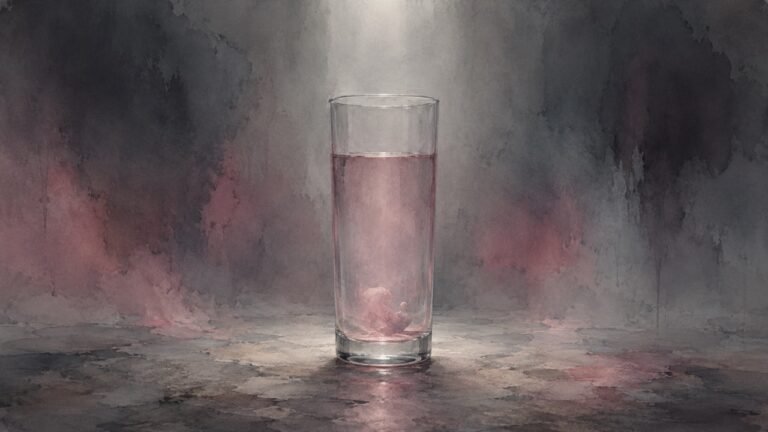
These were the last words I heard from Mulla Ahmad Kamani, spoken as the final stones were set in place and sealed across the mouth of the cave with plaster and lime, leaving only a small opening through which we could pass his daily bread and cup of water.
His wife sat on the ground before the cave, pleading: ‘Man, what are you doing? You will darken our fortune!’
I told him, ‘If you have sworn an oath, release yourself from it and let me redeem it with something better. If you no longer wish to remain among the clergy, then do not; cast off this robe and become an ordinary man like the rest of creation. But do not do this, for in our faith there is no monasticism.’
It availed nothing. As the wall rose course by course, he gazed only at the sky. The clerics sent word that they would declare him an infidel. He paid them no heed. They warned the people to shun him. Do not reproach me; every threat and enticement I offered him fell upon deaf ears. Ever since he had gone into the desert and wilderness on the pretext of a forty-day retreat and contemplation of the world’s affairs, his nature had so changed that even I, his cave-companion and friend from the days of childhood and youth, was forgotten.
Several times we sat together and I spoke plainly: ‘The people are in turmoil after hearing your words.’ I told him. ‘Guard your tongue and do not incite them! God forbid such speech! May God break your mouth as I fear you will leave the faith.’ But Mulla Ahmad only looked at me and smiled: ‘I shall incite no one. I mind my own affairs.’ Then he gathered the dozen or so books that now stand on my shelf, placed them in a saddlebag, and gave them to me, saying, ‘Mulla Hussein, these are my legacy. They belong to you.’
Before he entered the cave I called to him: ‘By God, you have become a rebel!’
‘What rebellion?’ He answered. ‘All the children of Adam are busy with this game. I wish to step out of it.’
‘Do not blow the trumpet from the wide end!’
He laughed: ‘I have uttered no blasphemy. If matters do not come right, the final station is death. By God’s will, if it does not befall you, how should it befall me?’
I wondered whether the jinn had cast a spell upon him. But listen: for the first three years I myself brought him water and bread each morning and evening. Then came the day when, no matter how loudly I called, there came no reply. After seven days of this, finding the bread and water untouched each time, I was certain he had died. I informed his wife. None of the villagers paid heed; they were too occupied with their own livelihoods, and Mulla Ahmad Kamani had slipped from memory.
The clerics forbade a funeral service, claiming the man had left the faith. On the fifth day I carved upon a stone slab: ‘The tomb of the late Mulla Ahmad Kamani, year 518 AH,’ and sealed the opening in the cave wall. A month or two later his wife left Qara-su, and after that I heard no more of them.
* * *
I feared that Master Mahmoud the mason, moved by Zahra’s weeping and lamentation, would abandon the work. When the wall stood straight, I peered through the gap and saw her casting dust upon her head. My heart clenched. Mulla Hussein, my old friend, wept bitterly like one bereaved. When evening came and the light failed, he took hold of Zahra’s garment and dragged her away.
For several months matters continued thus. I no longer recall which year it was, but one day when they came I gave no answer to anything they said. They came in the mornings and left at dusk for several days, until their visits ceased altogether. By my reckoning it must have been daytime when I rose, yet inside the cave it was dark. I realised they had sealed the opening. From that moment the cave was plunged into darkness.
It was the third or fourth night. I had been out in the desert. The sky was overcast and heavy. From time to time the roars and howls of nocturnal creatures filled my heart with dread.
Some hours into the night, beneath the flickering light of my dying lantern, I suddenly saw two bright points emerging from the blackness of the plain. ‘Bismillah,’ I said. The points drew nearer. In the dim glow I made out a young gazelle. It approached the light. Its large eyes looked straight into mine. The lantern sputtered, one moment bright, the next dark.
The gazelle, too, before my eyes, was there one instant and gone the next. For the gazelle as well, I existed one breath and not the next. The lantern failed. For a long time I saw nothing; no gazelle, no desert, no sky. I was certain the young gazelle saw neither me, nor desert, nor sky. Without the lantern’s light, none of us existed. I was left bewildered by this game, this allusion, this sign, in that empty wilderness where no one else was, and the world and I were alone.
I thought: perhaps I too am a lantern to my world. When I do not look and cast no light, nothing comes into being. This world and all that is in it are nothing but dream and illusion. I am the lamp of this dream. The earth is a dream, the sky is a dream. Mulla Hussein, the fields below the village, the bread I eat, the taste of Zahra’s lips, all are dreams, and I alone am dreaming the world. Wherever I turn my gaze, things exist; when I turn away, they cease.
Thereafter I abandoned food and sleep. What game is this in which I am caught? I must break its rule. If I see nothing, hear nothing, say nothing, then there will be no dream. The veil will be lifted. And if in that state I die, the curtains will part and the secret will be revealed. In either case the purpose is attained. I strove to discover the mystery. Now I no longer know how many days, months, or years I have sat upon this platform.
Three times I have seen various people come, break open the cave wall, some offering vows and prayers, lighting candles and touching me. Others have sat at the entrance selling amulets for their own trade and, after a time, departed. There was also a drunkard who would whisper constantly in my ear: ‘If you are who you should be, speak to no one but me, for these folk are madmen; when they hear the truth they will stone you and agree upon your killing.’
I was most eager for my own death, yet I no longer had strength even to open my eyes or lips, let alone argue with anyone. Each time the people saw no miracle, they rebuilt the wall and left. My body has dried and feels nothing. My voice echoes only inside my head. Many times I have wished for death, but the one who has imposed this torment upon me neither contends with me nor sets me free. It is He who will not allow this lamp to be extinguished.
* * *
Mulla Hussein and the villagers had been at the cave for some time. Inside there was nothing but the seated form of a man staring fixedly at the opposite wall, and a broken bowl lying at the foot of the stone platform. Outside they had found fragments of a stone inscription bearing a date.
Mulla Hussein gazed at the man upon the platform with a mixture of fear and reverence; at times the face seemed faintly familiar. The sun had reached its zenith when they were all ushered out of the cave and the broken courses of the wall were raised once more.
Master Mahmoud the mason brought water from Qara-su and plastered the surface with clay and straw. They fitted the broken inscription into the upper opening and departed.