
First the wretched pandemic, then the indifference of Iranians towards wearing masks, and finally the complete unemployment of us genetic engineers following the birth of Hana, the first cloned goat, during the Ahmadinejad era. These three factors combined to bring about the total extinction of red kangaroos in Australia.
Eighteen years ago, when the secretariat of the Anti-Corona Headquarters contacted me and summoned me with some urgency to a meeting of the Supreme Council, I was forty years old and had just entered my prime. The reason for the meeting was the failure of all eleven preceding sessions, the content of which I had been kept entirely in the dark about. Every incentive and punitive measure that might conceivably have induced Iranians to wear masks had already run headlong into a wall. The authorities’ despair had in fact reached the point where they decided to replace the people, since this particular people could not be governed. A people who refuse to wear a simple mask for the sake of their own health and that of their loved ones, and who regard not wearing one as a form of civil disobedience and a two-fingered salute to the state, needed to be changed; and in the view of those senior officials, this change had to go to the very root rather than resemble the crackdowns of before, which were shallow and short-lived and after a while returned both the people and the officials to square one, or perhaps a notch below it.
The specific question was how to create an entire generation that would be born already wearing a mask and would no longer need to be managed and micromanaged at every turn. An organic mask that would filter clean, healthy oxygen from lethal microbes and pollutants and guarantee the complete wellbeing of all citizens. A membrane: light and soft yet highly resistant and impermeable, enclosing both nose and mouth entirely, one that would be drawn aside only when eating and drinking, and never for kissing or licking, responding to the parasympathetic nervous system, and returning to its original position of its own accord once these vital functions were complete, without any act of will from the individual. The deeper strategic aim of the plan was to purge the mouth of contaminants such as the capacity for speech, which had over millions of years grown like an unwanted parasite around the gustatory sense of the human race and had gradually turned life into an unbearable, incessant din. The health of the body and soul of the citizenry was the primary objective of this grand strategic initiative.
At first, as I stirred my cardamom chai with a saffron rock candy, I smiled and took it all as a joke. But as positions hardened and the questions directed at me turned technical and specific, I pulled myself together somewhat.
“This kind of project requires extensive research, Haj Agha. It could take decades. And there’s no guarantee it’ll come to anything.”
“Why wouldn’t it, brother? Why are you putting the mockers on it, dear engineer? You want resources? Here you are. The entire Alborz and Zagros mountain ranges are at your disposal. Happy now? Bring me results, engineer. The eyes of this nation are upon us and you, this nation that is falling in its millions like autumn leaves. There’s no room for stalling and, what do you call it, shilly-shallying. Is it shilly-shallying or silly-dallying, Saeidvand?”
“It’s shilly-shallying, Haj Agha.”
“Whatever. I want results, engineer.”
“By Ali himself, it isn’t that simple. One wrong step and we’ll be mired in something we can’t get out of. We’ll be finished.”
“We won’t be finished, my dear, we won’t. Now that you’ve invoked Ali, step forward, and leave the rest to us.”
And we stepped forward. I handed the gentlemen a full and lengthy list of equipment that ran to two volumes in its own right, from a simple beaker to colossal industrial centrifuges, from the tea boy to the PhDs on the other side of the water who had been my old classmates. How they managed it I have no idea, but within less than a month the most classified project in the history of Iran was under way: two hundred metres beneath the Lut Desert, ten hectares in area, enclosed within seven layers of security with specialist inspection patrols, an array of anti-aircraft, anti-missile, anti-radar and satellite-jamming defences. The highly experienced team assembled around this project carried a formidable record of achievements.
Professor Harandi had identified the gene for homosexuality in American bison that were on the verge of extinction and had managed to cure them of the collective grief that centuries of mass hunting had visited upon them. Professor Amiri, at NASA, was directing the design, manufacture and mass production of sanitary towels for female astronauts, whose numbers were growing by the day. Professor Mirzakhani we included in our team only nominally, to lend mathematical credibility to the project, since she had already been dead for years before breast cancer finished her off. The funds that had been earmarked for replacing her headstone and laying out a memorial garden at the Los Gatos Cemetery in California were redirected, with the blessing of her family, to charitable purposes.
For those with little familiarity with the nature of our profession and speciality, a plain analogy may serve better than a mouthful of jargon. Our work resembles the nocturnal vigil of a small boy outside his architect father’s study. The moment the father dozes off or nips to the lavatory, the little rascal darts behind his personal laptop, logs into his account and starts pressing buttons; and the machine, making no distinction between this change of user and any other, responds to these acts of mischief. A window opens or closes on the monitor.
A beep sounds from the speakers, or a crooked line is drawn across the intricate building plans that the architect father is in the process of drafting in AutoCAD, and the child is seized by a strange, unprecedented thrill at the sight and sound of it all, a sensation whose taste, like mint toothpaste, keeps sleep cool and flavoured in his mouth until morning. We are like that child in those rare moments when God loosens his grip on the reins of destiny to allow himself a little rest, like a pilot setting the controls to autopilot to drink a coffee and watch the light of the sun flowing like a cascade of gold between the clouds.
The story of creation, likewise, is mapped out in a complex piece of software called the chromosome, composed of strands of DNA. All of our physical and spiritual characteristics are configured through the arrangement of these strands, and God has only to move his cursor to lengthen or shorten them, add or subtract, and new, varied human beings are created. We sneak our way into this complex software and perform what we imagine to be extraordinary feats, which ultimately amount to nothing more than the mischief of that naughty child and which, of course, occasionally bring catastrophe in their wake.
Once we turned up the kindness gene in a number of guinea pigs to such a degree that they simultaneously coupled with stray dogs and cats, briefly producing a tender bond between them, before ultimately becoming a rather satisfying meal for the latter. We did achieve significant results, however. For the first time, we analysed the stupidity gene and discovered that it has a four-year evolutionary cycle that governments exploit extensively during elections, though with minor adjustments this cycle can be made considerably shorter, even daily. Numerous reports have come in from people who feel they go to bed intelligent and wake up idiotic.
For the red kangaroo project, after many sessions, the same approach was chosen. We found the nanometric structure of the fibres in these marsupials’ pouches neither in the wing membranes of Brazilian bats nor in the flying squirrels, which, given the way they spread their legs when they glided, were under the protection of the International Sex Workers’ Union and could not be subjected to genetic experimentation. These pouches, being the site of gestation and reproduction, have through millions of years of evolution developed a semi-intelligent defensive structure against micro-organisms and amoebae, automatically repelling any living or non-living foreign body from entering. They were considered the finest available tissue for the construction of organic masks.
The method was as follows: all of the kangaroo’s genes would need to be identified and then removed with sufficient precision that in the end, practically speaking, nothing would remain of the animal but the empty pouch at the front of its belly. We would then graft a human gene onto this pouch in such a way that a human mouth would grow at the front of the pouch and gradually the entire human body would follow. Some might regard this as literary wordplay or a species of scientific madness; but the reverse procedure, grafting the marsupial’s pouch gene onto humans, would have resulted in the creation of hyperactive and highly intelligent people who, in the ambition of their scientific endeavours, would have set off for Mars and ended up at Mercury, where they would all have melted.
In the end, the gene of the empty, downy kangaroo pouch was obtained by deleting the totality of the animal’s physical existence. We told the gentlemen, and emphasised a thousand times, that no science had yet been able to establish the presence or absence of spiritual qualities in the pouch of a red kangaroo; and they responded only with raucous laughter and asked us simply to put our trust in God, which was something that was practically impossible to do. No pickpocket, with his hand already in the pocket of a weary, sleeping passenger on a bus, stops to wake him up.
The gentlemen stroked the soft down of the kangaroo pouch as though it were a piece of cloth from an Imamzadeh shrine, and passed it from one to another after touching and admiring it.
“Truly, well done, Doctor. You’ve done something wonderful. You’ve made something for the face that has no weight to it at all.”
“You don’t even feel there’s a mask over your mouth.”
“It’s like having a scarf wrapped round your face on a winter’s day.”
“So when will you fit it to people?”
I said, when the trials on guinea pigs were complete. They said this was a waste of time and that the disease and high death toll had made any delay or procedural formality quite impossible for them. I said we had no knowledge or experience whatsoever of this graft, by which I meant attaching a kangaroo pouch to a human jaw. They said that experience would come once it was attached, and besides, what consequences could this possibly have that were worse than these mass deaths? I said in that case who would obtain the approval of the senior clerics and Grand Ayatollahs?
They said this was none of my concern, that they themselves would arrange everything, and indeed they did. Only one of the clerics appeared unannounced and agitated after the midday prayer, storming into my office and demanding to know who would answer to the Imam of the Age if, in the house of the Shia, the handmaidens of the Lady were born with three vaginas like female kangaroos, and the men came into the world with forked penises like their males. I was genuinely astonished at this high level of zoological expertise, particularly regarding a mammal that has no natural habitat in the Islamic world. He was right, in point of fact: female kangaroos have three vaginas, two lateral ones for the forked organ of the male and one central one for delivery and the exit of newborns. I calmed him down and swore on the Quran that no such catastrophe would occur, and indeed none did.
The first generation of masked humans was born nine months later. They were beautiful and endearing infants, whose mouth pouches quietly drew aside when they felt hungry so that the mother could place her breast inside, and they never once cried. They spoke only when necessary, and this necessity manifested itself in the involuntary parting of the skin-like membrane over their mouths, even when they had nothing to say. This capacity proved essential in the evening and night prayers, which must be recited aloud, and played a fundamental role in raising the spiritual devotion of young people; and nine years later, when the first pouch-bearing girls were celebrating their coming of age, it earned me the Ghazali Foundation Prize.
This is an award given annually to a scientific or technological achievement that has exerted the greatest influence on raising the level of religious observance in society. They were well-behaved and untroublesom adolescents with average IQs, who never once picked up an unextinguished cigarette end from the ground and never flicked one another in the testicles during PE. The girls, however, had large breasts that seemed at any moment liable to burst from their bras. The deadly pandemics had stripped the tree of the nation so bare of its fruit and foliage that it more closely resembled the old, crow-filled television aerials of deep winter in some remote village.
Everyone was waiting to see the first generation of pouch-bearing Iranians mate, eager to taste the fruit of this great leap forward in science; but it was still customary for human beings to fall in love before reproducing, or at least such an expectation still existed. An anxious heart the size of a country was beating with just such an expectation, yet no one said a word to anyone else. I was fortunate that nothing resembling the bloody boxing bouts by which male kangaroos compete for mates and territory was reported; on the contrary, parents grew deeply worried when they sniffed their sons’ underpants in the laundry basket and peeked over the top of the bathroom door and confirmed that the boys were not even masturbating.
But it was not long before the great event finally occurred. Not here in Tehran, not even in Mashhad where everyone had gone on retreat. It happened in Isfahan, in Naqsh-e Jahan Square, at the corner of the Bazaar-e Honar, amid the maddening clanging of the coppersmiths’ hammers, which fell completely silent at the precise moment of the event. Not another sound came from those great cauldrons. The steel heads of the hammers turned to pink sweet jelly and dripped onto the aprons of the coppersmiths, who without thinking began to lick them ravenously.
The black horses of the carriages, blinkered as they were beneath all their heavy brass-studded finery, stopped dead in their tracks and refused to move a step despite the relentless whipping of their grooms. Their shoes might as well have been welded to the cobblestones of the square. The aged muezzin of the Sheikh Lotfollah Mosque, from the height of his minaret, forgot forever how to call the azan at the sight of what was before him. The beautiful wine-bearers from the miniatures of the Ali Qapu came to life on the walls, poured away the four-hundred-year-old soured wine in their cups in disgust, and craned their heads from the windows all at once to look. In the lane of the araq sellers, a large flagon of willow-blossom araq fell from a shelf by itself, shattered, and drowned the square in its scent. A cat took fright and bolted.
Narges and Nader had been frozen in place facing each other, struck by a sudden current that leapt from the laughter crumpled in their eyes. Slowly and simultaneously the membrane before their mouths drew apart, and the laughter drifted down from the eyes of the two young people towards their lips and filled their mouths with starlight. For a hundred and twenty days they stood there facing each other in that same spot without moving, and the smiles on neither of their lips grew faint. The samosa sellers tried everything to put a morsel of food into their mouths and failed; but spring without hesitation poured great drops of rain into their open, loving mouths. The Romani women from the south had set out with their daffs and tambourines and spoons and had pitched their tents in Naqsh-e Jahan Square, burning wild rue around the young couple’s heads to blast every evil eye into oblivion. They had hung long prayer beads with beads of holy earth from Karbala around their necks and were keeping the gnats away from their mouths.
The police had restored order but UNESCO had come close to removing Naqsh-e Jahan from the World Heritage List. On the hundred and twenty-first day, Narges’s mouth stirred as though she were about to say something. All the Romani women lined their ears from the girl’s womb to her throat in a row, hoping to hear her words, letter by letter, with their own ears before the words emerged. But the words, to everyone’s astonishment, descended from above, from the girl’s mind, and fell from her mouth onto the ground like dog muck, and began to wriggle. It was a faint, listless “I love you.” Soft and sticky, with its eyes shut, about the length of a little finger.
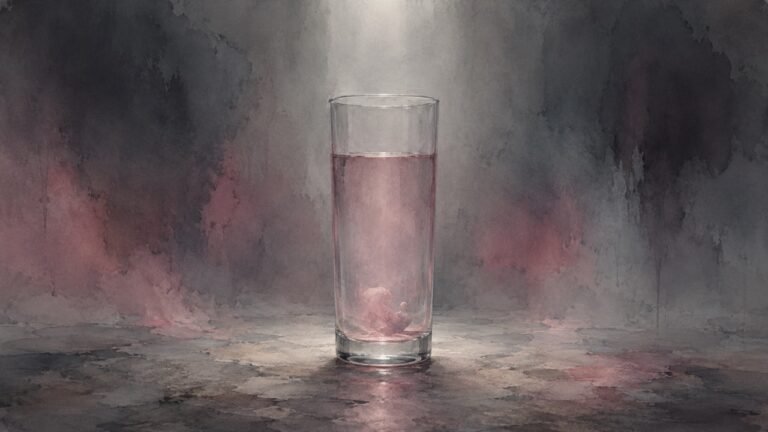
Khadijeh, who had been manually and orally satisfying widowed stallions in the royal stables of Bahrain and had taken a month’s leave to come to the port city and have her wisdom teeth extracted, as they were causing distress to the animals, stepped forward and picked up the creature as it squirmed in the dust of the flowerbeds, cleaned it carefully with her calloused, henna-stained hands and dropped it into a glass of sugar water that had been prepared for it. The creature twitched and tried to climb up from the bottom of the glass, but after one futile attempt coiled itself up for good and sank to the bottom. The old women recited Van Yakad and blew on themselves. Some of them gathered their belongings and left for the south that same night; but Khadijeh remained. In the middle of the following night she heard a faint murmuring from between the girl’s lips: “I love you, I love you, I love you.” She got up and saw that the girl’s lips were smiling but her eyes were pouring with tears.
The “I love you”s spread across the ground and, none of them resembling another, dragged themselves across the cobblestones of the square towards some unknown destination. Khadijeh hurriedly gathered them up and washed them under the garden tap. She held them carefully and went across to Nader and tried, one by one, to press those “I love you”s, unripe and sticky and slippery as they were, into the boy’s ear. To her complete astonishment, she saw that they entered his ear without difficulty, but all three emerged from his other ear a few minutes later and fell back onto the ground just as before. They were ugly but harmless creatures, entirely soundless, with a life span of a few minutes. Two days later, Narges retched up all her love at once. It was a nauseating crimson mass of words writhing in and out of one another that terrified every passer-by. Khadijeh immediately took the mass in a handkerchief and went and buried it in a corner of the flowerbed.
The panic engulfed Isfahan first, then Shiraz, from there it moved to Qom and Mashhad, then made its way to Tehran, and came straight to my office, accompanied by a great crowd of protesters in funeral shrouds. The ground was full of those nauseating, ugly, short-lived “I love you”s and I was the one who owed the world a scientific answer and a solution to all this fear and distress.
But the answer was perfectly simple and clear. When the reproductive hormones became active, the mouth behind the pouch was treating the words flowing from the brain towards it as its own embryos and retaining them inside the mouth; but since there was no nutritional source behind the pouch inside the mouth and it was impossible to feed words of love, after a hundred and twenty days the words fell out onto the ground unripe and undeveloped; and since no apparatus had yet been devised to sustain unripe words until they reached maturity, they died and ceased to exist.
A German researcher, having experimented on ten thousand volunteers, had concluded that words of love are nourished by kisses, a claim quite at odds with the rationalist tradition of German culture and better suited to publication in a tabloid. I, steering well clear of such populist temptations, stated categorically that words of love are merely vestigial products of human evolution, like the appendix in the large intestine, and that if not quickly forgotten they endanger the entire reproductive process and can in certain cases pose a serious threat to the health of the individual or the couple.
The only remaining concern was the fear and distress that came over couples at the moment of vomiting up these words; but there existed a more appropriate route for ridding oneself of all these unripe, useless utterances: the back passage. Pharmaceutical factories immediately turned to producing a range of effective laxatives in various flavours and sizes, though even after all these centuries the finest preparation still comes from Ibn Sina’s own prescription: warm castor oil mixed with milk or honey, to be taken first thing in the morning on an empty stomach. Psyllium husk and rhubarb also have miraculous effects.
Narges and Nader, following these very prescriptions, had no difficulty whatsoever, and a month later, on the first of Dhu al-Hijja, having fully evacuated all their “I love you”s down the lavatory, were happily and contentedly married, and in due course had twins.
The extinction of the red kangaroos was also connected to the poaching that arose from the orders of millions of previous generations who had been born without a muzzle and who were prepared to go to any lengths, even plastic surgery and organ transplants, to rescue themselves from obscurity in this way.
Toilet paper has been sold in the form of the Divan of Hafez for years now; but the flying squirrels remain a protected species and are, in a worrying development, multiplying rapidly.