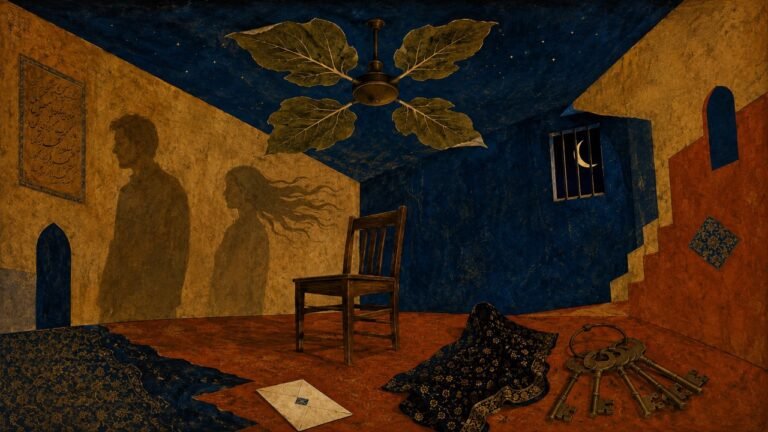

The man woke still heavy with fatigue. He yawned, stretched, and thumped his clenched fists against his chest. The walls of his small room appeared to have edged closer overnight, as though the space were quietly shrinking around him day by day. The air felt thick and stale. Sunlight had slipped through the arched, rainbow-coloured window on the eastern wall opposite him and lay at his feet.
With some reluctance he hauled himself from the bed. The mattress sighed beneath him, rising as if equally exhausted. Since the coronavirus had arrived he had barely stepped outside, spending nearly every hour of the day and night upon that same bed. His soul ached for open air, for sunlight on his skin, for the blare of car horns and the clean, damp scent of winter earth. ‘Today I go out,’ he told himself. ‘Let whatever happens, happen. Enough of this. Who knows — perhaps the whole virus is just a rumour, some English plot or another American sanction. Death to America and England!’ The thought made him laugh. It had been a while since he had voiced the old chant. Death to America. What a marvellously adaptable phrase it was. It fitted everyone, everywhere. No matter one’s education, wealth, social standing or age, whenever life pressed in or something displeased you, those words could be summoned like a balm.
He had first heard the slogan on television at the age of two. Death to America. He had scrambled up at once, little fists raised, and shouted it with all his childish fury. But now, who or what truly deserved his death to? The enemies had multiplied and blurred. Israel, France, Saudi Arabia, the Emirates, Bahrain — he was never quite sure whether the last was a country or simply another name like Trump. These days his mind felt fogged, as if the great bell of some apocalyptic church on Sixth Bahman Street had struck inside his skull. He remembered how that bell had been stolen on the charge of spreading Christianity. His hand tightened into a fist and punched the air. His mouth fell open of its own accord and he cried out: ‘Death to Haji Ali, who took his cleaning lady as a temporary wife! Death to Ms. Roghieh, who spins a fresh lie every day and spreads hatred! Death to Mostafa the grocer on the corner, who raises his prices by the hour! Death!’
The outburst cooled something inside him, yet it seemed that every day the list of those deserving death grew longer.
He had uttered death to so many times that when his best friend, Reza died, he had stood after the funeral prayers and declared loudly, ‘Death to death!’ Reza had worked for the oil company and suffered from shortness of breath. One cold November night, returning from his shift, he had been caught between protesters and police near Imam Square. The tear gas had seized his lungs and killed him. Death to him too, it seemed.
Still lost in these thoughts, the man dressed and ate a half-hearted breakfast. He stepped out into the stony streets of Bushehr. The winter wind sliced like needles through his bones. After a month indoors the small, usually melancholy port town felt strangely vast and invigorating. Yet the streets were deserted. He wondered if it was Friday, but the bank stood open. Inside, plastic sheeting covered every surface and there were no customers. The staff all wore masks and gloves. He caught his reflection in the glass door — bare-faced, gloveless — and felt foolish. He almost muttered death to all bankers, but for the first time the words faltered before they left his tongue.
He approached the branch manager in a demanding tone. ‘Give me a mask and gloves.’ The manager said nothing. He reached into the drawer of his large brown desk, produced several masks and a single glove, and handed them over. The man thanked him, left the bank, and thought, if I’d shouted death to they would surely have thrown me out. He fitted the mask over his face, pulling it high beneath his eyes. His skin grew warm beneath the fabric.
He gazed at the shuttered shopfronts. The entire row of goldsmiths, drapers and furniture sellers was closed. Prices, however, continued their relentless climb. He wanted to cry death to the price bubble, death to those who inflated it, but something held him back. He pressed his lips together and walked on towards Sixth Bahman Square.
In the distance he spotted the old cobbler seated at his little stall, looking as solitary as a man lost in the desert. The man rubbed his eyes and quickened his pace, a voice in his heart urging him forward before the figure vanished. The emptiness of the market had begun to feel uncanny. It was indeed the cobbler — the same hunched back, the same white curly hair, the same single-colour, faded but spotlessly clean clothes. The sharp scent of wax cut through the air like the point of a blade. He was patching a worn black leather shoe, driving his heavy, calloused hands and the awl deep into the leather with each stroke. Both tool and shoe groaned in protest.
The man glanced at his own shoes; the soles were half detached. He stepped closer and offered a greeting. The cobbler replied in his usual quiet, warm, slightly indistinct voice: ‘Hello. How are you? Shoes torn? Sit down.’ All in a single breath. Then he added: ‘A pair that cost two hundred thousand Tomans two weeks ago now costs ten lakhs — a million tomans.’ He sighed deeply. His small eyes, magnified behind thick glasses beneath long pepper-grey brows, gestured towards a shabby, torn managerial chair opposite him. The man sat. The chair creaked.
‘I grew tired of being cooped up at home,’ the man said. ‘I thought I’d come out for some air. But it seems no one else is about. Only the bank was open.’
The cobbler cut in: ‘The bank and me.’
The man offered him a mask. ‘Put this on. Covid is dangerous, no joke.’ The cobbler gave a bitter smile. ‘I don’t wear masks. A man with empty pockets isn’t killed by Corona virus. He’s killed by shame and sorrow. Our income is in rials, our expenses in dollars. Theft has become a virtue. Workers have no bread. Mothers’ breasts have run dry. Fathers sit at home, stripped of dignity by poverty. Every day brings news of embezzlement and the smell of death.’
The cobbler, once known for his calm, was now seething. Hatred flickered in his eyes. He drove the awl harder into the shoe, the sounds growing sharper, the leather’s groan more piercing. The man watched him, teeth clenched. He wanted to say death to America, and did. Even with poverty staring him in the face, he still wished to dispatch death far away. The cobbler glanced at him. ‘You say death to America? From which direction do you send it?’
The man looked surprised. ‘Does direction matter?’
‘Of course it matters,’ the cobbler replied. ‘If you send it from the west, it never reaches America. It takes the lives of Kurdish porters in Kermanshah, then Yazidi girls in Iraq, then Syrian children in Homs, Aleppo and Idlib, then the people around Beirut port in Lebanon. I doubt any death would be left to cross the Mediterranean. But if you send it from the east, it first seizes the people of Sistan through drought and poverty, then the schoolchildren and teachers of Herat, then civilians in Kashmir, then the Uyghur Muslims in the labour camps.’
The man could only stare, mesmerised by the old man’s words. The cobbler continued: ‘We once had a prosperous, blessed land. I remember the days of plenty. Women still had spirit and bore children who would one day cry There is no god but God. I was a herdsman in Badakhshan, raising sheep and cattle. Afghanistan had a king then — a king of such grandeur and power that blood seemed to drip from his moustache. Fourteen Tajik woodcutters could not have severed his thick neck, and no one dared meddle. Every morning I wished death for the king and a republic for Afghanistan. One night I slept, and when I woke the country had become a republic. Daoud Khan, the king’s cousin, was president. He was so powerful no one dared look him in the eye. But later I read communist books and came to see the Soviet Union as paradise and Lenin as its gatekeeper. I wanted a democratic republic, so I shouted death to Daoud Khan. One spring day in ’57, after his trip to Pakistan, the revolution came — not the Saur Revolution, a blind one. I rejoiced, but they seized my lands and gave them to the landless. I could not stay. I went to Kabul. There was upheaval. Soon after, Hafizullah Amin became president. Everyone was lost, unsure what they wanted from the world, the government, or themselves. I wandered Kabul as a refugee. Afghanistan no longer belonged to the Afghans. Amin was moderate and tried reforms. He returned confiscated lands and freed political prisoners, but many did not like it. They shouted death to Amin until he too fell, and Dr Najib came. The party changed its name, yet the people still cried death to Dr Najib and the Homeland Party. The Mujahideen came with Islam, then the Taliban came with Islam. They worshipped the same God, faced the same Qibla, followed the same Prophet, as they slaughtered one another. They killed the people. Women had no place left in their own land. The Taliban’s only philosophy was death. Wherever they laid their hands on, turned into ashes. Their religion was an enemy to humanity. They stole money and jewels but made long beards a virtue, and worshipped a cruel, bloodthirsty God whose only command seemed to be the killing of Afghans. It served only traitors and the lustful. Men were stoned and shot in stadiums. Cinemas were destroyed, books and films burned…’
The man rose to his feet. In his mind the same question kept turning: Is all this a conspiracy? But why here, why in my land, why in the Middle East? Why doesn’t death visit Denmark or the Netherlands?
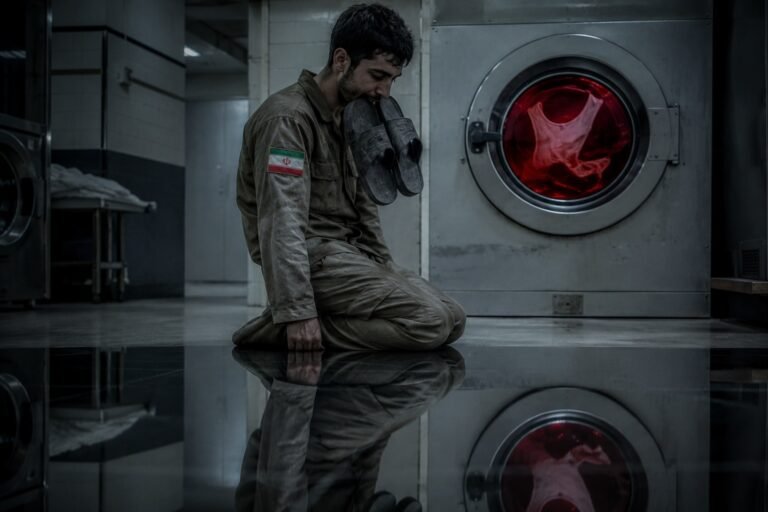
He was so bewildered that he left his shoes behind with the cobbler and walked home in his slippers. The cobbler, lost in his own memories, never noticed.