
In those days no one had a bathroom in their own house. The neighbourhood had two public hammams, one for men and one for women. They were run by Ashraf and Qasem the bathkeepers, wife and husband. Their entire family worked in the trade; they owned hammams in various quarters of the city. The baths opened every day from the morning call to prayer until the evening call and never closed.
The men’s hammam stood at the top of the neighbourhood, near the main street and beside the coffee house. The most notable event that took place there and bound it to the life of the quarter was the groom’s bathing ceremony. The bridegroom would be washed, after which a group of men would escort him from the door of the hammam to the wedding venue — usually somewhere in the neighbourhood — with blessings, salutations and singing.
The women’s hammam lay at the end of the second alley. Most women visited once a week, and that day was considered their bath day. Many things happened inside the hammam of which the owner was fully aware. She did not divulge everything to everyone, but there were those close to Ashraf the bathkeeper who learnt of events sooner than others. Consequently, many pieces of news first leaked out from there. The women would often remain for hours on end, for the hammam was the setting not only for ordinary conversation and simple pastimes but for women’s celebrations, wedding baths, postnatal baths and the preparations for henna nights.
Upon entering the hammam, one found Ashraf’s till and desk on the right, together with a large shelf displaying bathing items such as loofahs, scrubbing cloths, towels, whitening powder, soap and the like. A little further on stood a fairly large icebox in which she kept water, ice and Coca-Cola; anyone who wished could buy some, note it in the ledger on the desk, and settle the account along with the bath fee when leaving. Opposite these, running all around, was a broad platform for sitting, dressing and setting down bags and bundles. The platform was roughly semicircular, with space in front of it for ceremonies. Below the platforms, just before the corridor on the left that led into the main bathing area, lay a small pool of cold water where everyone washed their feet twice — once before entering the hammam and once after coming out.
Inside the main bathing hall was a large rectangular pool around which the women sat. It was customary for each person entering to pour a bowlful of water from her own bath over the others. This was regarded as a gesture of goodwill, and no local woman would dream of omitting it. Another common practice was for the younger women to offer, out of respect, to scrub the backs of the older ones. When they had finished bathing they would go to the far end of the hammam and take turns rinsing under the standing showers before emerging to sit for a while on the outer platforms and pass the time. Anyone arriving at that moment would offer good wishes for the warm bath and exchange a few words with those who had already finished.
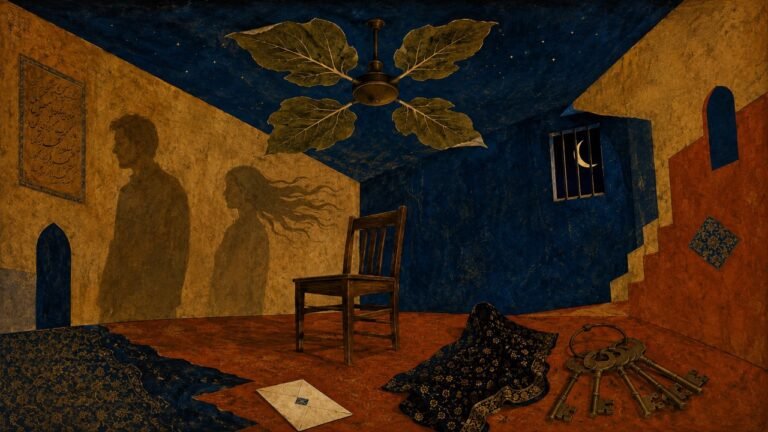
The hammam was an important place for the women of the neighbourhood. Indeed, it could fairly be called the wellspring of many events. Some went so far as to choose a daughter-in-law for their sons there. One particularly explosive incident occurred on the day when, at a quiet hour and with Ashraf the bathkeeper’s coordination, several neighbour women poured water from a bowl containing forty keys over the head of Azizeh, Bashir’s wife, while reciting prayers that her skirt might turn green — that is, that she might conceive. For a long time she had tried every remedy without success. It was said she had consulted several skilled doctors to no avail. Ashraf did not perform such rituals for everyone; Azizeh’s case was different. She was one of the few customers who came to the hammam more than once a week, never stayed excessively long, spoke little, and always gave a good tip.
Before misfortune befell her, Azizeh’s good fortune had been on everyone’s lips. But once it became known that she could not have children, much of the talk died down. People now looked upon her with pity and regret.
The window of our house overlooked Azizeh and Bashir’s home. Theirs was a south-facing house, so from the balcony one could see almost the whole courtyard. Azizeh always rose early. She would sweep and water the courtyard and tend to the flowerpots. Every morning she prepared Bashir’s breakfast in the kitchen at the end of the yard, arranged it on a large copper tray, and carried it into the house. Their life was deeply loving. Each morning she would see him off to the door and watch him down the alley until he disappeared from view. In those days it was frowned upon for husbands and wives to hold hands in public, yet whenever they went out together they walked hand in hand. Neighbours would secretly point them out and sometimes laugh quietly behind their backs.
Azizeh was the eldest daughter of Hajj Ramazan-Ali the butcher and had married her cousin Bashir. Ramazan-Ali had brought his sister’s son to Tehran, taught him the trade, set him up with a house and livelihood, and then given him his own daughter. They were a good family, comfortably off with a modest fortune that made many seek alliance with them; yet they had preferred Bashir. “He is one of us,” they said. “Family. Family eat each other’s flesh and do not throw away the bones.”
The happiness of Azizeh and Bashir was so widely admired that anyone wishing to invoke blessing on a young marriage would say, “May they all have Azizeh’s fortune.” Stories of their love had circulated long before the wedding. They began after the marriage contract when Bashir gave the film from his camera to Sadegh, son of Akbar the photographer, to be developed. It was said that the groom had kissed his bride at the ceremony, had the moment photographed, and even ordered a frame for it. One neighbour had seen the photograph when it was ready, but the matter became serious a week before the wedding when visitors for the trousseau ceremony and gift-giving went to the new bride’s house and saw the picture hanging on the wall of their bedroom.
Azizeh’s happy story ended on the day the news leaked from the hammam and people gradually realised that all those comings and goings were for doctors’ visits. Everyone now understood that Azizeh and Bashir were seeking treatment to have a child. The question of Azizeh’s childlessness became the talk of women’s gatherings throughout the neighbourhood. Some tried instead of gossiping to offer remedies and advice. Because of such talk Azizeh had resorted to vows, offerings, every kind of medicine, fortune-tellers, soothsayers and charm-writers, yet nothing worked. In the end one day her father Ramazan-Ali, whose spirit had been gnawed by the neighbours’ rumours and the fresh gossip reaching him daily, could bear it no longer. In front of his pale, drawn daughter he told Bashir that God’s law was made for such days and that he must take another wife so they might have a staff for their old age.
Once word spread that Bashir was looking for a second wife, the atmosphere in Azizeh’s house changed completely. Whenever I looked down from the balcony into their courtyard, the former warmth and liveliness were gone. Sometimes she would leave the house unswept for days. Gradually the flowerpots dried from lack of water, their number dwindled, and finally they disappeared altogether. She no longer prepared lavish breakfasts for Bashir, nor saw him off at the door, nor was there any more hand-holding.
No one quite knew when Bashir stopped coming home. Everyone said he had taken a wife and would still visit Azizeh; when they had children they would live together or at least take houses near each other. At first he would come secretly when the alley was empty, see Azizeh briefly and leave, but his visits grew rarer until they ceased entirely.
Azizeh no longer attended the monthly religious gatherings at neighbours’ houses. She went nowhere at all. She was ashamed to be questioned and have no answer. Many said she had become ill-fated because her life had been lived so openly. Everyone had a theory, and the neighbourhood filled with stories whose truth no one ever established. The real issue was that everyone sided with Bashir. They supported him, saying he was a man and had the right to offspring. Some went further, claiming he had been remarkably patient and had refrained for years out of decency. After all, what man could tolerate a barren hearth?
One or two springs and summers passed with no sign of Bashir. Azizeh was a wife in name only, and few enquired after her. Then one evening he returned with an old holdall. His arrival was so unexpected that at first the neighbours did not recognise him. For several days he did not leave the house, and their guesses proved futile. When he finally appeared in the neighbourhood and his movements became more regular, it took time for everyone to learn why he had come back. The question on everyone’s lips was whom he had married and what had passed between them. After several months the truth slowly emerged: the fault had lain with Bashir himself. All the medicines and injections given to Azizeh had been in vain. The doctors had said it was Bashir who needed treatment if they were to have a child. He had discovered this only after taking a second wife.
Even after all the suffering and humiliation, Azizeh never became the woman she once was. Even after Bashir’s return she spoke to no one, and neither neighbours nor family ever learnt what she had endured. They simply said she had melted away like a burnt candle. Once it became known that the defect was Bashir’s, people spoke of it less. They would occasionally murmur “God forbid,” but no one asked Azizeh what she wanted or whether she could bear to live with him after his return. It was taken for granted that she would stay and accept her husband. No one said that Azizeh had the right to become a mother, that she should divorce him and seek her own fortune. And so Azizeh had no choice but to remain with Bashir; she made no complaint and remained by his side.