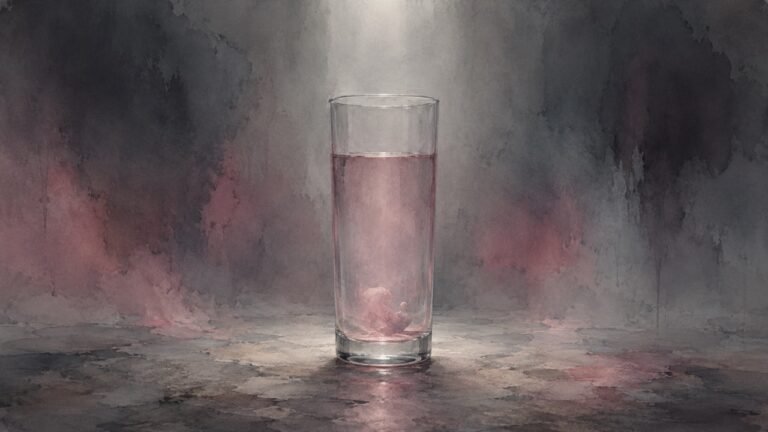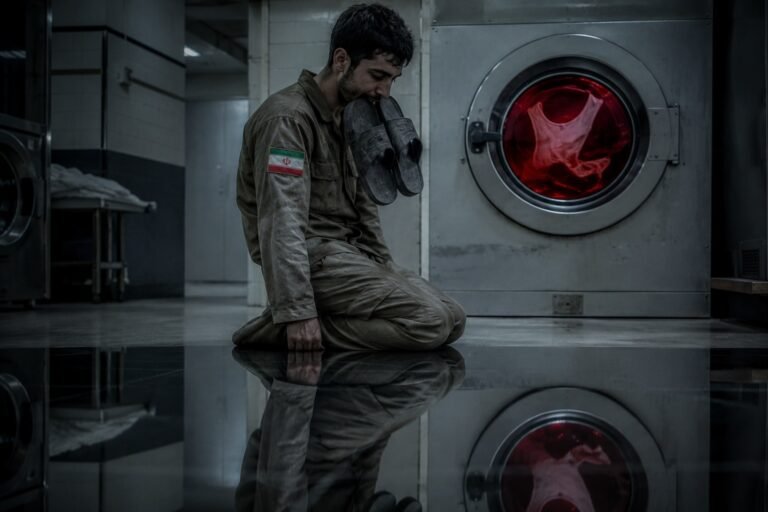

Gol Alam insisted that Americans’ blood was green. He said his brother had taken him to see the corpse of an American soldier he’d just killed and he, Gol Alam, had seen it with his own eyes. “The man was drenched in green blood. His face, his chest, his hands, all his clothes were green,” he said. “I swear I’m not lying.”
But we knew he lied sometimes.
“Americans are pink, you idiot,” Sami said. “Haven’t you seen them? Their faces and hands are pink like babies. If their blood is green, then their faces should be dark green.”
“Go eat your shit,” snapped Gol Alam. “I’m telling you I’ve seen the body. What do you know?”
“What do I know?” said Sami and looked at me. “We don’t believe you.”
I felt bad for Gol Alam. I liked to think that Gol Alam’s story was true. So I said I believed him and Gol Alam held up his head and smugly glanced at Sami who was staring at me with wide eyes and a half-open mouth. It made me feel good to see Gol Alam’s smiling face. I didn’t want to hurt him especially after their home was bombed and both his parents and his little sister had died under the rubble. That was a year ago and that was when Gol Alam’s elder brother left the village and we heard he’d become a Talib. Gol Alam lived with Mullah Faizullah, his uncle, who was the Imam of the mosque and taught us the Quran. He called him ‘ezma kaka’ or my uncle, but when he spoke about Mullah Faizullah’s wife, he called her ‘ezma mour’.
One day when Gol Alam said he wouldn’t play Haft Sang with us because his mour had asked him to help her at home, Sami mocked him and said she wasn’t his mother.
“It’s none of your business,” Gol Alam yelled at Sami and flounced away.
I was angry with Sami and called him a dumbass. Sami didn’t play with us that day and went back home. That was another reason I’d said that I believed Gol Alam’s story. I was still angry with Sami.
I was also reminded of a frog we’d killed a few days earlier on our way to the mosque. Gol Alam was the first to pick up a pebble and aim it at the frog, sitting by itself on a boulder by the riverbank. It leapt towards the water but before it could dive, one of the stones caught it in mid-air and crushed it on the rocks. Gol Alam walked over and stabbed the frog with a sharp stick so that it stuck to the tip of it. He examined the squashed frog up close, then grinned and chased us with the stick. The smaller kids ran away, screaming. I couldn’t remember what colour the frog’s blood was, but I was sure it wasn’t red. So maybe blood wasn’t always red. Maybe Gol Alam wasn’t lying this time and Americans’ blood really was green.
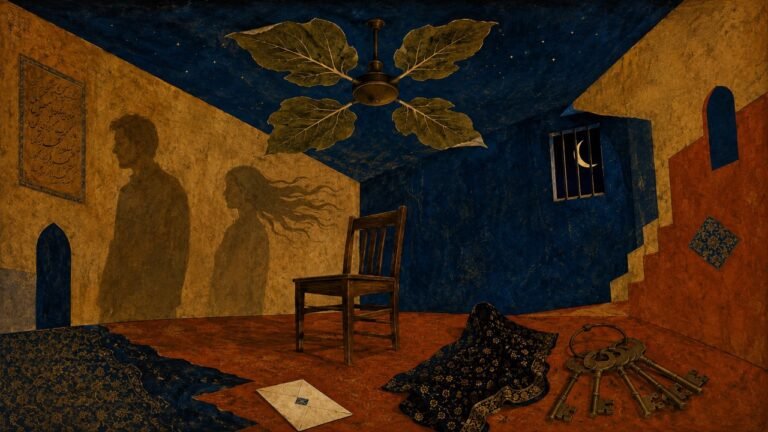
Americans were different from us, anyway. Way different. They were huge and fat like giants. Even Samad Palwan, the village wrestling champion, looked like a child beside them. The soldiers wore strange clothes covered with green spots and metal hats that resembled enormous tortoise shells, which gave them a creepy look. There were wires running in and out of their clothes and strange gadgets dangling from their bodies, which even the grown-ups couldn’t explain. They always wore sunglasses and never took them off, not even when they sat in the shade of the mulberry tree in front of the mosque.
They often came to see Mullah Faizullah who’d fetch the mosque’s rug and spread it under the tree, where they’d sit in a circle and talk and drink tea. Mullah Faizullah rarely said what they talked about. Other times a few more men, including my father and Rasul Khan the village elder would join them. Rasul Khan was very suspicious about the soldiers’ sunglasses. He said the Americans could see through the walls with those sunglasses and that they could even see people naked. To make his point, he never went to meet the Americans without cloaking himself in his thick Chappan coat, despite the scorching heat of Helmand.
The first time Gol Alam and I were allowed to sit with the men and watch the Americans up close, I was surprised that they couldn’t sit cross-legged on the floor, like us. They sat on their bottoms, with their knees raised and legs spread apart or stretched out, without taking off their boots. Then Gol Alam elbowed me and when I looked at him, he nodded at the swollen crotch of one of the American soldiers. I couldn’t stop my laughter. Mullah Faizullah threw his shoe at us and it hit Gol Alam on the head. We ran away and watched them from afar. The American soldiers said something to the Afghan man who accompanied them and whom we called Tarjoman, and he spoke to Mullah Faizullah. We didn’t hear what he said, but seeing Mullah Faizullah shaking his head angrily and wagging his forefinger in our direction, we were sure he didn’t want us back.
“It’s all your fault,” I shouted at Gol Alam but he only shrugged. When the Americans stood up to leave, one of them came over to us and took out a handful of lollipops from the baggy pockets of his trousers. Gol Alam and I held out the flaps of our tunics for the soldier to pour the lollipops into. The soldier said something and smiled. We both laughed and said ‘Tanka, Tanka’, something we had overheard the Afghan man and the Americans say to each other sometimes. We guessed it wasn’t a bad word.
When they spoke, the Americans sounded loud and bossy and their lips and jaws moved a lot. Tarjoman would tell us what the Americans had said and on rare occasions when someone from the village spoke, he’d tell the American what the man was saying. Tarjoman wore American clothing but since he was a normal man, like us, the clothes and the tortoise-shell hat he wore were too big for him and made him look ridiculous. But we were intrigued by the way he could change his voice and move his lips and jaws faster to speak with the Americans. We sometimes mimicked him. But the deep grunts we made sounded nothing like his and after a few minutes we’d have sore throats. The village men were also pleased that Tarjoman could speak Pashto, so they didn’t make fun of his silly appearance in his oversized clothes.
But one day a fat American with a thick yellow moustache, like a bull’s horns pointing downward, got angry at Tarjoman. “Madarfakker, fak ye,” the big American yelled at him.
We assumed he said something bad to him when we heard the word that sounded like ‘mother’. Tarjoman looked terrified but didn’t say anything. That day, when he left with them in their gigantic cars, the men spent a good part of the afternoon making jokes about Tarjoman and called him a lackey, and a spi zoy, son of a dog. Mullah Faizullah said he was a wide-assed pimp whose father was cursed, and spat on the ground, as he would normally do when he was disgusted.
A week later when the Americans came back and sat under the mulberry tree, Gol Alam, standing at a safe distance from them, suddenly cupped his hands around his mouth and shouted, “Madarfakker, fak ye,” and ran away. Tarjoman got angry and chased him, but couldn’t catch up with him and returned, panting, to the tree. Gol Alam stopped and booed the man. “Fak ye, madarfakker,” he shouted again.
The Americans laughed and said something to Tarjoman and laughed louder. Tarjoman smiled timidly and pulled up his trousers and adjusted the tortoise hat that had dropped down over his eyes.
That evening, after prayers, Mullah Faizullah pulled Gol Alam’s ear and slapped him and sent us all to water the vegetables he had planted in a small plot in the mosque yard. Gol Alam started bragging about his brother again. “My brother will kill Tarjoman, too,” he said.
“He’s not American,” Sami said. “Why would your brother kill an Afghan?”
“Who cares,” Gol Alam shrugged. “Tarjoman is a lackey. He works for the Kuffar.”
“Liar,” said Sami. “Your brother isn’t even allowed to come to the village. My father says Mullah Faizullah has promised the soldiers that he will surrender your brother to them if he ever comes to the village. The Americans are going to kill him.”
“Whose dogs are the Americans?” Gol Alam said angrily. “My brother can kill them all if he wants to. And this time I will prove to you idiots that the Americans’ blood is green.”
“Rubbish,” said Sami.
“You’ll see. I’ll prove it.”
Mullah Faizullah appeared on the terrace and we stopped arguing. “Tell your mour I will be home late tonight,” he said to Gol Alam before turning to us. “Open your ears and listen carefully. Tomorrow the Americans come again and I don’t want any of you around them. Stay at your homes and don’t come out.”
“Why shouldn’t we be allowed to watch them?” Sami and I protested. “We didn’t do anything.”
“You heard what I said,” Mullah Faizullah snapped. “No one is allowed. I swear to God, I will skin you alive if I see you anywhere near them,” he warned, wagging his finger in our faces even after he’d stopped talking. He then told us to get lost.
We wandered off but unlike Sami, Gol Alam and I didn’t go home. Instead we walked around the mosque and cowered beneath the crumbled mud wall from where we could see Mullah Faizullah sitting with another man on the terrace with a kerosene lamp placed between them.
“He is my brother,” whispered Gol Alam, after a while.
“What?” I asked and narrowed my eyes to see better the face of the man in a dark turban.
“I want to see him,” said Gol Alam.
“No.” I pushed him down, and didn’t let him get up. “Mullah Faizullah will get angry if he sees us here. Let’s go home.”
“Hush…” Gol Alam whispered.
We saw Mullah Faziullah running his fingers through his bushy beard while speaking, but only picked up a few random words; surrender, American soldiers, tea tray, mulberry tree. Then Gol Alam tiptoed away and I followed. He looked very angry. I knew why. We had both understood the same thing from what we’d just overheard; that Gol Alam’s brother should surrender to the Americans so that they all could sit under the tree and drink tea together. If that happened, Sami wouldn’t miss a chance to make fun of Gol Alam.
People rarely talked about Gol Alam’s brother after he’d joined the Taliban. When the planes bombed our village and blew up Gol Alam’s house and killed his parents and sister, Gol Alam and his brother were not at home. That night we’d been invited for dinner at Abdul Malek’s, my father’s cousin. His wife, Torpekai, was pregnant and very scared of the loud roar of the planes and the explosions. Then the soldiers kicked open the door and stormed in. They told my father and Abdul Malik to kneel on the ground and place their hands on their heads. I was on the terrace; one of the soldiers shone his torchlight at my face and said something, which I thought meant I was supposed to stay where I was. Then Abdul Malek’s dog, Gorgi, freed itself from its leash and attacked one of the soldiers. The soldier shot the dog. Gorgi whimpered and fell to the ground. Abdul Malek got angry and swore at the soldiers but they didn’t let him move. After an hour, having searched the whole house, they left and we returned to the room. My mother let Abdul Malek enter, but didn’t let my father and me inside. But from the crack of the door, I took a glimpse of Torpekai, lying on the mattress with a huge bloodstain on it. They never told me what had happened but my mother stayed with Torpekai for the next two weeks.
That night, the soldiers found Mullah Faizullah but Gol Alam’s brother disappeared. They searched all the other houses in the village but couldn’t find him. At last they cuffed Mullah Faizullah and took him with them. My father said the soldiers thought Mullah Faizullah and Gol Alam had been helping the Taliban who passed through our village and sometimes spent the night in the mosque. Two weeks later Mullah Faizullah returned and we resumed going to the mosque and learning the Quran.
“Do you think your brother will surrender to the Americans?” I asked Gol Alam when we reached his house.
He didn’t even look at me. He only shrugged and ran inside.
***
The next morning, I found Sami at the riverbank where we usually gathered to play Haft Sang. Sami said he had seen a few of the kids in the alleyway and they’d told him they didn’t want to come and play because Mullah Faizullah had told them to stay at home. He hadn’t seen Gol Alam. We played for a while, then stopped to watch the Americans’ truck slowly driving into the village. They waved at us and we waved back. Sami said we should go and watch them.
“If we hide behind the mosque, Mullah Faizullah won’t see us.”
“He’ll find out and get angry,” I said.
“Don’t be such a coward. How’s he going to find out?” he said and we raced towards the mosque.
By the time we reached it, the Americans had already gathered under the tree and Mullah Faizullah was standing aside with one hand on his chest and with the other pointing to the rug spread on the ground. When all of them sat down in a circle, Gol Alam’s brother came out of the mosque. He was wearing his dark turban and a green waistcoat over his bright long clothes.
“Who’s that?” Sami asked. “Isn’t he Gol Alam’s brother?”
“Yes,” I said, surprised. “He is.”
“I knew Gol Alam was lying,” Sami said excitedly. “Didn’t I tell you his brother was going to surrender to the Americans? I knew it.”
I didn’t say anything. I watched Mullah Faizullah as he walked quickly towards Gol Alam’s brother and took his hand and led him to where the Americans were sitting. Gol Alam’s brother sat down before them and placed his hands in his lap. We couldn’t hear what they were saying, but from the way Tarjoman kept turning his head back and forth from the Americans to Gol Alam’s brother, we guessed they were talking about something serious. After a while, Mullah Faizullah went inside the mosque and returned with a tray full of cups and a large kettle. Tarjoman helped to put a cup in front of everyone in the circle. When Mullah Faizullah picked up the tray and returned towards the mosque, we ducked down behind the wall so that he wouldn’t see us.
Then came a LOUD bang. The earth shuddered and made my stomach churn. Hot air brushed against my face. I thought I was dreaming. I looked at Sami who’d cowered on the ground with his hands over his face. When he removed his hands, his face was pale. Then everything went quiet. I peeked from behind the wall and saw a huge cloud of dust hovering above the mulberry tree. I stood up and slowly walked forward.
I’d always thought dead bodies must be scary. But they aren’t. I looked at the remains of Gol Alam’s brother; a mutilated face trailing a shoulder with just one arm, inside a crater, right beneath where he’d been sitting. It was filled with blood. There were bloodstains on the tree and broken branches littered the ground. Tarjoman was leaning against the tree with his head tilted sideways and his eyes still open. Blood gushed from a hole in his head. The soldiers’ bodies were scattered on the ground. Then at the foot of the tree, I saw Gol Alam. I knelt beside him and wiped the blood off his eyes. His clothes were torn and dirty. Sami, having followed me, screamed and collapsed.
Gol Alam tried to open his eyes. “I fell off the tree,” he murmured and swallowed hard. “I’d climbed up before they arrived. I told you my brother could kill all of them. He’d told me he wouldn’t forgive them.” He licked his lips and scrunched up his face. “I can’t move my neck. It hurts. Are all the Americans dead? Is their blood green?”
My chest felt tight. My eyes were burning. I looked around and saw Sami sobbing still.
“Yes,” I said, “their blood is green.”
“I told you, didn’t I?” Gol Alam whispered and smiled faintly before closing his eyes.