
I can hear my uncle’s voice belting out the lyrics: “The lover fears the lover…” Whenever he sings along with this song, it means he’s in a bad mood. Sometimes I can hear weeping quietly, sighing or groaning coming from his room.
My uncle has some interesting habits. He shows his state of mind through the songs he listens to.
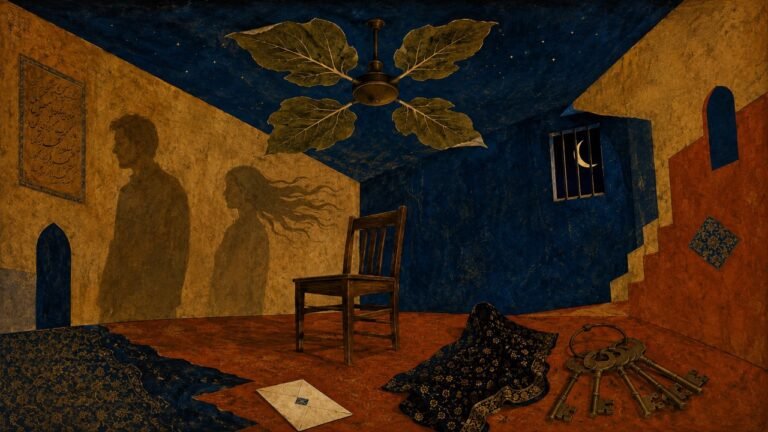
There are only five songs saved on his smart phone. One is the one I just mentioned, which plays from his room whenever, according to my mother, “his elephant remembers India.” Another is Hotel California, which means he’s high; the strong smell of hashish comes out of his room and usually provokes a sharp reaction from my grandfather, mostly in the form of curses. One of them he shouts with particular force: ‘Bi Ghairat, you spineless bastard!’
Then there’s Dov’è l’amore, which signals that he’s in a good mood and you can be sure he’s also had a drink or two. Every time song drifts out of his room, my grandmother mutters repenting prayers, performs ablution, and stands up to pray.
I should also mention that until a few months ago, before he traveled to America, he used to listen to the Pashto song of Dastmal-e Rawr instead of Dov’è l’amore. Another song that puts him in a thoughtful mood is John Lennon’s Imagine. Though he says he removed the part about “a world without heaven” because, God forbid, it borders on blasphemy.
And then there’s Adele’s Set Fire to the Rain. Whenever he plays that one, he gets into a strange state; even he doesn’t seem to know whether it’s good or bad.
My uncle’s entire life seems to revolve around these five songs. He says he has divided his life into two parts: before those songs came into being and after them. Before was the age of ignorance, his wasted childhood and teenage years. After is the period of his youth and early middle age, which he is now living in full awareness. Every time he finishes saying this, he lights a cigarette, puts on Adele, and I know it’s time for me to leave the room.
My uncle is thirty-nine, and he has a strange fear of turning forty. The whole family is somehow worried about it too. They believe he will die when he turns forty. It’s an unwanted family inheritance. There’s no logical reason behind it, but everyone points to the family history. My uncle’s uncle died at forty in a car accident. His uncle’s uncle also died at forty from some unknown illness. And my grandmother says that even his uncle’s uncle died at forty after falling off a donkey.
That’s why, ever since my uncle turned thirty-nine, he has been depressed and has been counting down the days. My grandfather calls all of this “nonsense” and has said loudly, more than once and loud enough for my uncle to hear: “What a waste of that university chair you sat on.” Every time he says this, he picks up his spittoon and spits into it with force.
As for my grandmother, poor woman, she has prayed and prostrated so much that her knees and ankles have become calloused. A while ago, when the pain got so bad she had to see a doctor, they diagnosed her with arthritis. My grandfather says it’s because of the way she prays; “too fast”. He always says: “Your grandmother doesn’t pray, she does somersaults.”
But my mother’s feelings toward her brother are completely different. She is neither happy nor particularly sad about the situation. She has a strange, mixed feeling. Sometimes she feels sorry for him and a tear rolls down her cheek. Other times she curses him, because in her eyes, my uncle is in league with the people who killed my father.
In the beginning, I thought my uncle was a Taliban supporter. Later I realised that wasn’t what my mother meant.
Her resentment toward him started when he took part in the Loya Jirga, the great national national meeting, as a consultant for the release of dangerous Taliban prisoners. There was a lot of excitement those days. My grandfather was proud of his son for the first time and didn’t move from in front of the television for three whole days, hoping to catch a glimpse of him.
But my mother saw him as a traitor, a sell-out, and the killer of her husband. A few years earlier, my father had been killed on the highway when their car hit a mine. From my mother’s point of view, participating in that Jirga and supporting the release of the Taliban was a grave crime, no less than betraying the honour of the family. I don’t know where she picked up these strange expressions, but she used them.
Then, on the third day of the Jirga, I suddenly heard my grandfather shouting curses from the living room. I rushed out of my room, frightened, and found him cursing loudly, even dragging my grandmother’s good name through the mud.
My mother, on the other hand, had a smile on her face and kept repeating: ‘See? He’ll be someone’s servant for the rest of his life. Stupid man. They always use him like a donkey. He just carries their spittoon around at their gatherings.’
I didn’t understand what they were talking about at first, but gradually I pieced it together. My uncle hadn’t attended the Loya Jirga as a consultant. He had been there as a servant to one of the attendants, or, as my mother put it, as a lackey. My grandfather had realised this when he saw him on television.
To cut a long story short, once my uncle realised his lie had been exposed, he didn’t come home for a whole month. He stayed at his friends’ office, and I would sometimes take him food and clean clothes. Slowly I came to understand that my uncle wasn’t anyone important in that office, the same office he used to proudly take me to, saying that the country’s politics, appointments, and even provincial governors were decided there. In reality, he mostly sat by the door and guided guests. But he stubbornly disagreed with the rest of the family’s opinion and insisted that politics started right in their office and gradually grew from there.
He wasn’t entirely wrong. Over time, that same office began giving him more delicate, difficult, and influential tasks. He was even sent to America. At the time, I didn’t fully understand what his job was, but I gradually figured it out. His job was to create fake social media accounts, especially on Facebook and Twitter, attacking anyone who criticised the government or the office he worked for.
That was his job for several months. He constantly produced facebook status and posts on other social media. Sometimes he even published articles under different names on websites, defending the government and calling its critics cowards, fools, or politically ignorant.
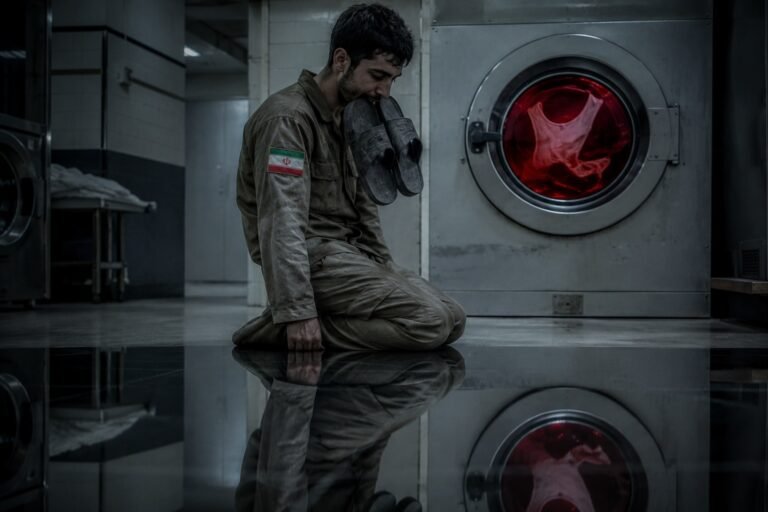
But eventually he got tired of it, or something changed, and he abandoned everything. On his last day, he revealed his real name and exposed the goals of the office he had been working for on the very social media accounts he had created. According to him, this was his way of apologising to the people. The move caused a huge uproar, and suddenly his name was all over the media. The very next day, however, the office and his former colleagues issued a statement calling him a lackey, mentally unstable, and illiterate. They denied any connection to this suspicious and treacherous individual.
After that, my uncle kissed politics goodbye and ‘put it away on the top shelf’. He withdrew into seclusion. It wasn’t as simple as it sounds, though. After that incident, journalists kept bothering him. Some people, or according to him, “certain individuals,” even wrote “traitor” on the wall of our house. Had my grandfather not known a few influential people, things could have gotten much worse.
He told me all of this himself after everything had calmed down. But aside from his political stories, my uncle also has a strange personal life. For example, he decided that he would marry the first girl he saw at university, and he did. Of course, it wasn’t that simple. It took him the whole four years of university to convince her to marry him.
According to my mother, who was in the same class as him, my uncle was a bit of a clown and did outrageous things that made girls say he was throwing himself at them. One of his legendary stunts was hanging from a tree in front of my aunt’s classroom for two hours until he couldn’t hold on anymore and fell. Luckily, he wasn’t seriously hurt. He also used to wear colourful clothes and sunglasses on rainy days, things like that.
After a lot of struggle, he finally married the girl he wanted. But his wife eventually forced him to move abroad. They went to Dresden in Germany, but she kept making excuses to move to Hamburg, where she had friends and relatives. This eventually led my uncle to leave her; at least that’s why he says it happened. Others say something different. My grandfather, for instance, says, ‘His wife milked him dry and took everything he had.’
Whenever I asked my grandfather what exactly my uncle had that she took, he would look at me, spit, and say, ‘Get lost, you idiot! Why are you asking me? Have some manners!’
In short, I still don’t know what my uncle actually owned that his wife supposedly robbed him from.
Right now, I’m standing outside his door, waiting for Amir Jan’s song to finish. As soon as it reaches the line “Let us scatter flowers and pour wine into the cup,” I knock. My uncle calls out, “Come in, come in!”
I open the door and walk in with a smile. “Salaam, Uncle!”
He gives me a dry look: ‘I told you a hundred times don’t call me you little clingy donkey foal! come in, sit down.’
Then, he quickly softens, smiles, and gestures for me to sit in front of him. He doesn’t like the word “Uncle,” but what can I do? I love him, and I’ve learned a lot from him.
I look at him and think to myself: This man is healthy. He has no illness. So how is he going to die? Maybe something sudden will take him, like lightning, or maybe… I want to say this to him too, but when I look at his face, I change my mind and ask something else instead: ‘Uncle, why don’t you talk to my mother so this resentment between you two is gone?’
‘I do talk to her. She’s the one ignoring me.’
‘Honestly, what does my father’s death have to do with you?’
‘When I call you a little donkey foal, this is exactly why. The day your donkey of a father was returning home from Kabul, I told him not to travel by road. He didn’t listen. He said he wanted to see the countryside and enjoy its natural beauty.’
He pauses, then continues with rising anger: ‘Idiot! What’s worth seeing on that death highway? Tell me, what’s so beautiful about the desert?’
He speaks as if he’s arguing with someone else. Then he turns to me and says, ‘And that’s how he met his end!’
He bursts out laughing. I look at him, annoyed, and say, ‘You’re talking about my father, Uncle!’
‘Go to hell, you little donkey!’
He says this, picks up a cigarette, and lights it. After a few puffs, he mutters under his breath: ‘Thank God you don’t have a sister. Otherwise, in a few years you’d be an uncle too. And with the qualities I see in you, you’d probably drop dead before you even turn forty!’
He laughs loudly again. Sometimes his words are sharp and sting, but because I love him so much, I don’t answer back.
He puts out his half-smoked cigarette and says, ‘Be careful your mother doesn’t get married.’
Surprised, I ask, ‘Why? Is there something going on?’
‘No, you idiot. Who would marry that crazy woman? I’m just saying, be careful. Because if she gets married and has a daughter, you’ll inevitably become an uncle. And then you’ll die, you fool!’
‘Bad enough that she…’
He cuts me off sharply: ‘You don’t talk about your mother like that, you little donkey!’
I fall silent, caught in strange contradictions. He can say whatever he wants about her, but I’m not allowed to. It’s confusing.
‘Forget all this nonsense! Hey…’
‘What are you thinking about, Uncle?’
‘Nothing. Sometimes I feel like getting back into politics at the end of my life and stirring things up a little’. He laughs.
‘Well, that wouldn’t be so bad.’
‘Shut up! Your grandfather will get hold of my balls again. I’m tired. Because the times were never in our favor…’
He doesn’t finish the sentence. He glances at me sideways and asks, ‘Have you read Ubayd Zakani?’
‘No, I’ve never even heard of him.’
‘Today’s youth are a bunch of illiterate, brainless idiots. It would be good if the Taliban came and put a turban on your heads so your brains don’t get aired out…’
He shakes his head and stops. He looks slightly angry. He always says things like this, and it reminds me of my mother’s words whenever my uncle’s intelligence is mentioned. She says, ‘he’s illiterate! He’s never finished reading a single book. If you don’t believe me, go see how many books he keeps in his room.’ She always points toward his small bookshelf while saying this.
Remembering her words, I glance around my uncle’s room. I don’t see any books. I’m about to ask him about the book he mentioned but he lies down on the floor and covers his eyes with his hand. This is his signal that means: Go away, I’m not in the mood.
I push my mother’s words out of my mind and think about what my uncle said. He’s right. The only way to break this cursed chain of dying at forty is to never become an uncle. So as much as possible, I should avoid it. Otherwise, I’ll end up miserable and die young.
As I walk away, I hear Hotel California from his room.