
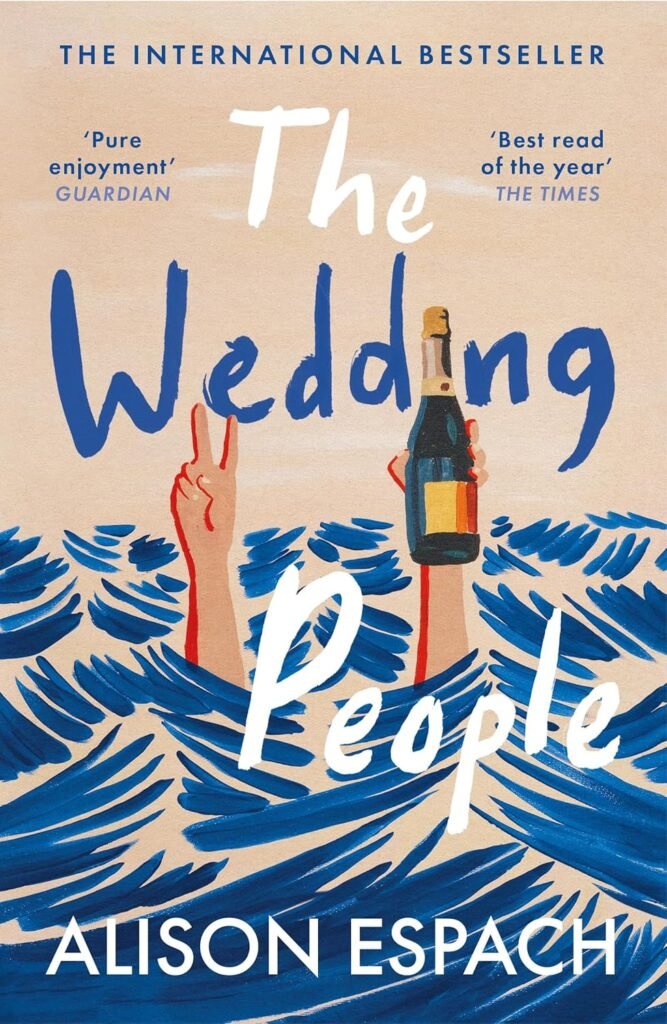
Alison Espach’s The Wedding People arrives with the kind of quiet confidence that only the best character-driven fiction manages to sustain. At its center is Phoebe Stone, a woman who has quietly unraveled — her marriage gone, her sense of self hollowed out — who checks into a lavish Newport, Rhode Island hotel with the darkest of intentions. What she finds instead is a hotel consumed entirely by a wedding party, and with it, an accidental belonging she never anticipated.
The premise walks a genuinely difficult tightrope: comic and catastrophic in equal measure. Espach handles this with considerable skill. The novel has been widely praised for striking a tone that is, as USA Today put it, “honest, wry and delightfully unpredictable” — and that assessment holds. The darkness never overwhelms the warmth, and the warmth never trivializes the darkness. It is a difficult balance, and Espach earns it.
The Guardian called it “pure enjoyment,” and The Times named it its best read of the year — endorsements that speak not to a lightweight read, but to one that leaves readers genuinely moved.
The relationship that forms between Phoebe and the bride is the novel’s quiet engine. What begins as mistaken identity deepens into something more searching — a study in what strangers confess to one another precisely because they owe each other nothing. Espach is particularly sharp on the strange intimacy of crisis: how grief, when cornered, becomes unexpectedly candid. Time magazine named The Wedding People one of its hundred Must-Read books of the year, a recognition that feels well-earned rather than merely promotional.
Its commercial success — a New York Times bestseller with over one million copies sold and winner of the 2024 Goodreads Choice Award for fiction — might invite suspicion from certain readers. It shouldn’t. Espach has written something genuinely generous: a novel about second chances that earns its tenderness without sentimentality, and that trusts its readers enough to sit, however briefly, in genuine discomfort before the light finds its way in.