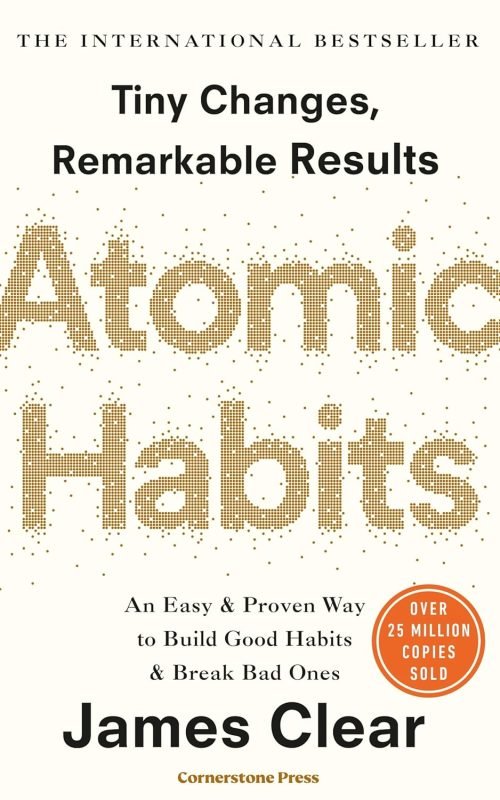
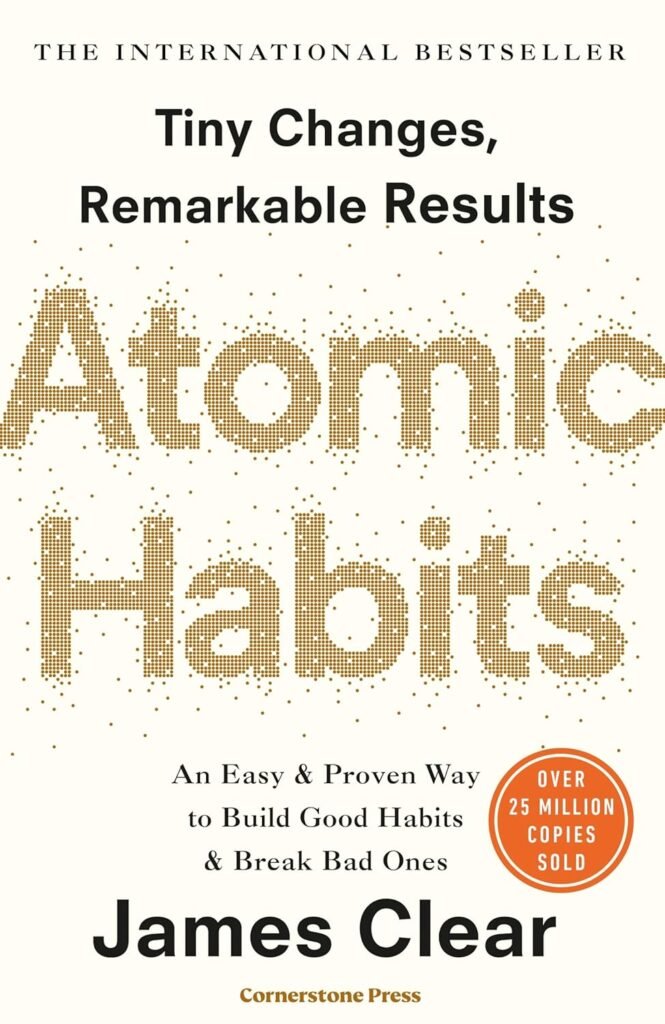
James Clear’s Atomic Habits has become one of the most widely read self-help books in recent years, with over 25 million copies sold worldwide. The central argument is straightforward: meaningful change does not require dramatic overhauls. Instead, Clear proposes that small, incremental adjustments to daily behavior, what he terms “atomic habits,” compound over time to produce significant results. Examples he draws on include doing two push-ups a day, waking up five minutes earlier, or making a single short phone call.
The book introduces a number of practical frameworks, including what Clear calls Habit Stacking, a method for linking new behaviors to existing routines. The approach is presented as accessible to ordinary readers rather than requiring exceptional willpower or resources. Clear positions himself as a habits expert, and the book’s global reach suggests the ideas have resonated with a broad audience across different countries and contexts.
The description frames the book as ground-breaking, though the core idea that small actions accumulate into large outcomes is a concept that has appeared in various forms across productivity and behavioral science literature. What Clear appears to offer is a structured and digestible way to apply these ideas in practice, presenting them through what the publisher describes as simple life hacks.
Given that no customer reviews are available for this edition, it is not possible to assess how readers have responded to the material in terms of practical usefulness, readability, or how well the concepts hold up against real-world application. The Amazon rating of 4.6 out of 5 indicates a strongly positive reception in general, suggesting that a large number of readers have found value in the book, though the specific reasons for that satisfaction cannot be detailed here.
Atomic Habits is a non-fiction self-help title aimed at anyone looking to build better routines or break unhelpful ones. Its commercial success is difficult to argue with. Whether the framework it offers goes beyond common sense or provides something genuinely new will likely depend on what the reader is bringing to it. For those new to thinking systematically about habits, it may serve as a useful and well-organized starting point.