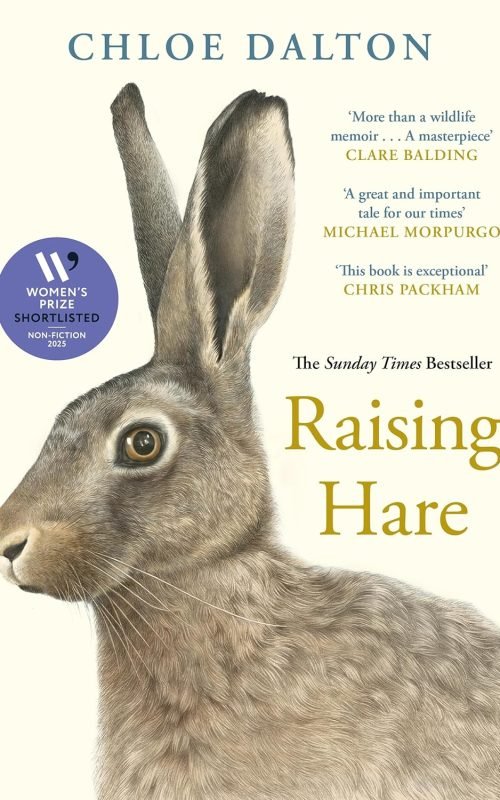
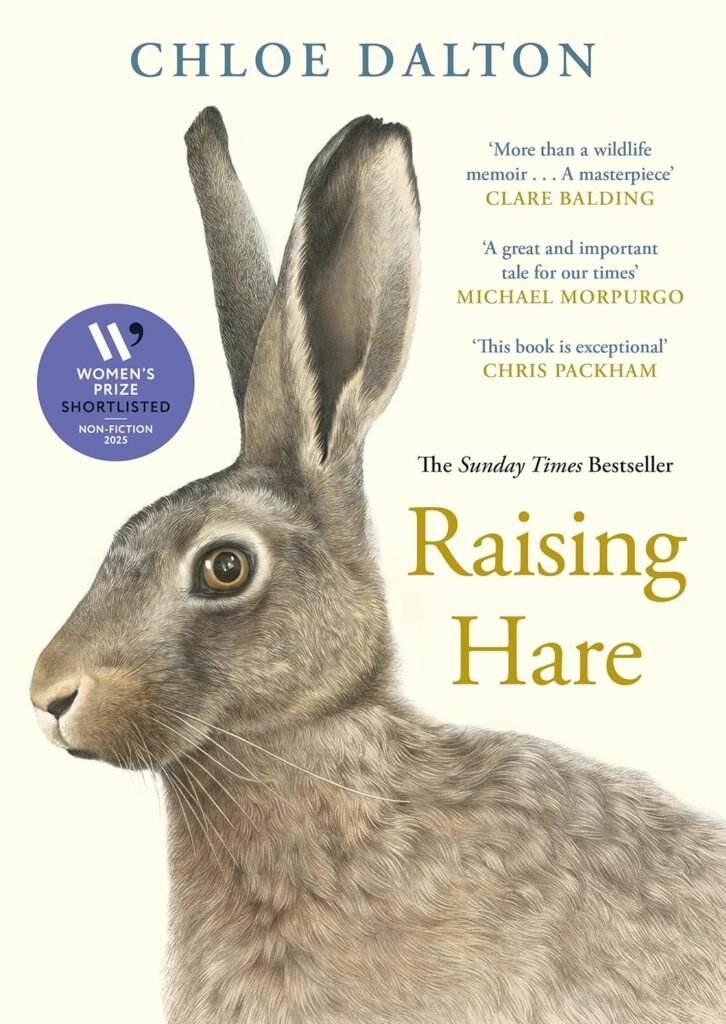
Chloe Dalton’s debut book arrived quietly in 2024 and found its audience quickly, becoming a Sunday Times bestseller and earning a shortlist place for the Women’s Prize for Non-Fiction 2025. The premise is straightforward: a woman working in politics finds an abandoned leveret — a newborn hare — and decides to raise it, eventually releasing it back into the wild. What follows is anything but simple.
Dalton uses the experience as a lens through which to examine her own life, particularly the burnout and disorientation that came from years inside Westminster’s political machinery. The hare, which she names Orion, becomes a counterweight to everything abstract and institutional in her world. Readers have noted that Dalton never sentimentalises the animal or treats it as a pet. She is careful and observant, and that discipline keeps the book honest.
What distinguishes Raising Hare from similar wildlife memoirs is the quality of the writing and the seriousness of its ambitions. Dalton weaves in the cultural and folkloric history of the brown hare — an animal that has appeared in British mythology, art and literature for centuries — alongside ecological data about its alarming population decline. The personal narrative and the broader environmental argument reinforce each other without either feeling like a digression.
Critics have been notably enthusiastic. Clare Balding called it a masterpiece. Michael Morpurgo described it as a great and important tale for our times. Chris Packham, whose judgment on wildlife writing carries considerable weight, said simply that the book is exceptional. Goodreads readers have echoed this warmth, with many describing it as genuinely moving without being manipulative, and praising Dalton’s ability to write about grief, purpose and the natural world in the same breath.
Some readers have noted that the middle section occasionally loses momentum, and those expecting a conventional nature diary may find the political autobiography threading through it slightly unexpected. But most regard this tension as a strength rather than a weakness.
Raising Hare is a book about attention — what happens when a person slows down long enough to watch something wild. It earns its praise without straining for it, and it leaves the reader thinking about landscape, loss and what it costs to ignore the non-human world around us.