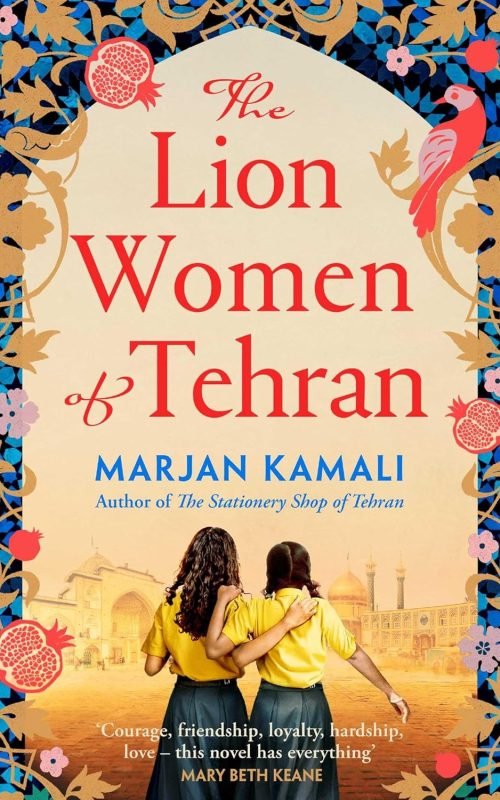
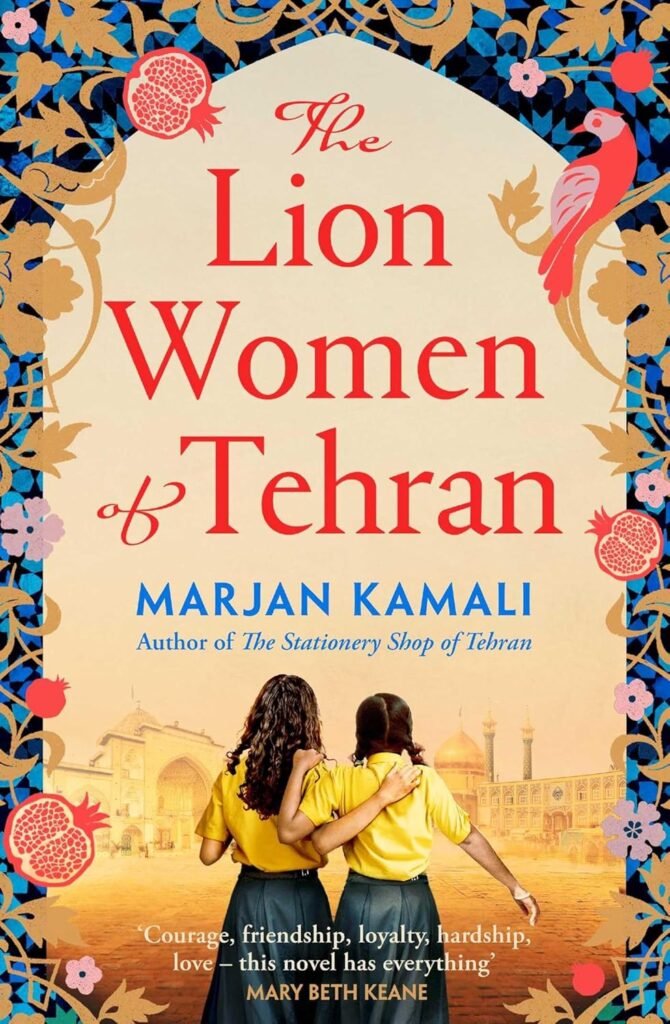
Marjan Kamali’s follow-up to The Stationery Shop of Tehran is a novel of friendship and survival set across three decades of Iranian history. The Lion Women of Tehran begins in 1950s Tehran, where seven-year-old Ellie loses her father and is pulled from a comfortable life into poverty and displacement. The move downtown leaves her isolated, dependent on her grieving and difficult mother, until a friendship formed on the first day of school changes the course of her life.
The novel spans three transformative decades in Iran, using the personal relationship at its center to explore broader themes of loyalty, betrayal, and what people sacrifice to endure. Kamali tracks how political and social upheaval shapes individual lives, particularly those of women navigating a society in constant flux. The friendship between its central characters appears to be the structural backbone of the book, tested by circumstance and time in ways that carry both historical and emotional weight.
The book has been selected as a BBC Radio 2 Book Club pick, and has drawn praise from fellow novelists. Sadeqa Johnson, author of The House of Eve, describes it as heart-wrenching. Adrienne Brodeur calls it heartbreaking and life affirming. Mary Beth Keane, author of Ask Again, Yes, highlights its range, noting that it brings together courage, friendship, loyalty, hardship, and love.
Kamali’s subject matter is well-suited to this kind of multigenerational, historically grounded fiction. Tehran itself functions as more than a backdrop, with the city’s changing character over three decades serving as a measure of how much the characters’ world shifts beneath them. The novel appears to take the full weight of that history seriously while keeping its human relationships at the center.
Readers who responded to The Stationery Shop of Tehran will likely find familiar strengths here: a focus on women’s inner lives, a long historical arc, and an Iranian setting that is rendered with specificity rather than used as mere atmosphere. For readers new to Kamali’s work, The Lion Women of Tehran seems a reasonable place to start. It is the kind of novel that aims to be both emotionally resonant and historically grounded, and by the accounts available, it largely delivers on both fronts.