
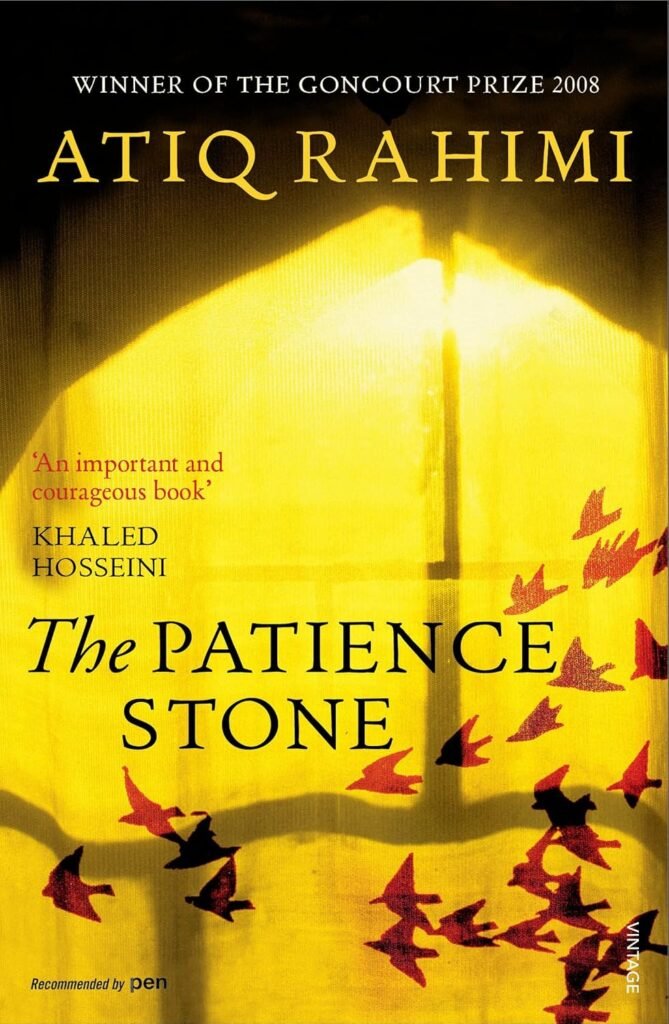
Atiq Rahimi’s The Patience Stone, winner of the Prix Goncourt in 2008, is a devastating and quietly radical work of fiction — spare in form yet enormous in emotional weight. Originally written in French by the Afghan-born author, the novel unfolds almost entirely in a single room, where a woman tends to her comatose husband, a fighter felled by a bullet to the neck. As the days stretch on, she begins to speak — at first cautiously, then with increasing abandon — unburdening herself of truths long buried beneath silence and submission.
The title draws from an ancient Persian myth: a syngué sabour, or patience stone, absorbs all the sorrows and secrets whispered to it until it finally shatters. The husband becomes that stone, and his silence paradoxically grants the woman her first real voice. What she reveals is a portrait of womanhood in wartime Afghanistan — marked by violence, longing, shame, and an aching hunger for selfhood — told without sentimentality or melodrama.
Rahimi’s prose, rendered beautifully in English translation by Polly McLean, is measured and almost ritualistic. The minimalism never feels cold; rather, it amplifies every confession with quiet intensity. This is a book that lingers — morally uncomfortable and deeply humane in equal measure. Essential reading for anyone drawn to literature that bears witness with unflinching honesty.