
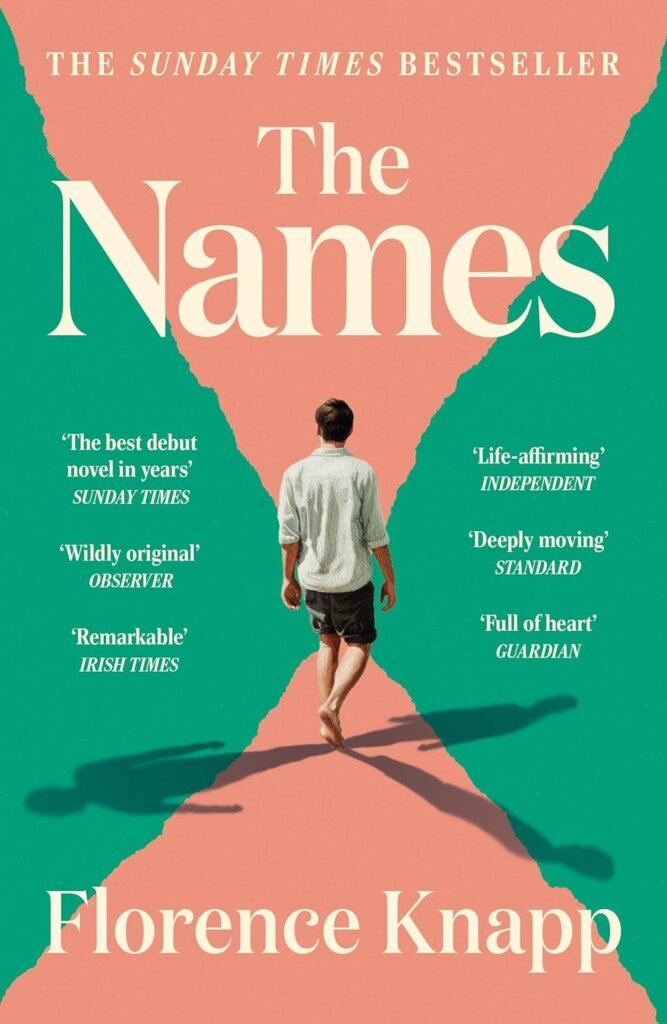
Florence Knapp’s debut novel arrives with the kind of quiet audacity that genuinely earns its acclaim. The Names opens in 1987, where Cora — trapped in an abusive marriage — must walk to a registry office and give her newborn son a name. From that single, deceptively ordinary act, Knapp constructs something formally daring: three parallel timelines, one for each possible name (Bear, Julian, or Gordon), each unspooling across thirty-five years to show how a mother’s small decision reshapes every life it touches.
Structure as Storytelling
The conceit could easily collapse under its own weight, but Knapp handles it with remarkable control. Rather than feeling like a literary exercise, the triptych structure becomes the emotional argument of the book — a sustained meditation on how identity, spoken aloud and written down, carries consequence. The novel asks what it means to name something, and in doing so quietly asks what it means to claim it.
“Wildly original,” wrote the Observer, while the Washington Post called it “dazzling.” The Sunday Times, perhaps most pointedly, declared it “the best debut novel in years.”
Such enthusiasm is not misplaced. Knapp writes about domestic abuse without sensationalism, holding the horror of Cora’s circumstances in careful, restrained prose that trusts its reader entirely. The damage inflicted within the marriage reverberates differently across each timeline, and the cumulative effect is genuinely moving.
Full of Heart
The Guardian’s description — “full of heart” — may be the most accurate of all. For all its structural ingenuity, The Names never loses sight of its people. Cora remains a fully realised, deeply sympathetic figure, and the novel’s emotional honesty grounds what might otherwise feel like formal cleverness for its own sake.
A Sunday Times bestseller and one of the BBC’s top books of 2025, The Names is that rare thing: a debut that is both technically ambitious and genuinely tender. Knapp is a writer worth watching closely.