
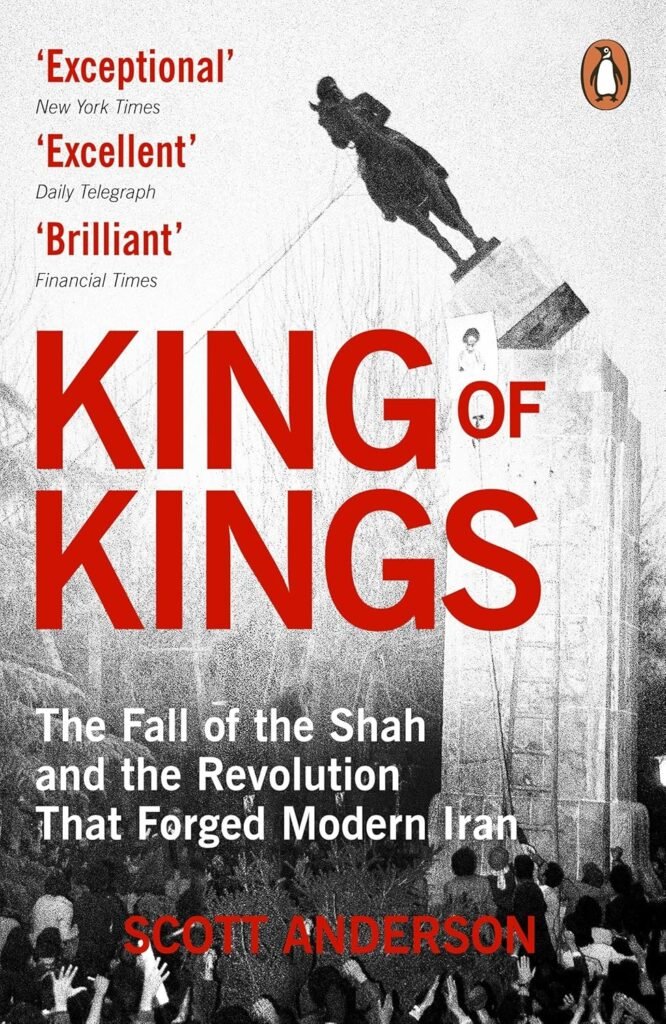
Few historical events have cast a longer shadow over the modern world than the Iranian Revolution of 1979, and few writers seem better equipped to excavate its ruins than Scott Anderson. In King of Kings: The Fall of the Shah and the Revolution That Forged Modern Iran, Anderson brings his considerable journalist’s instincts to bear on one of the twentieth century’s most consequential upheavals — and the result is, by most accounts, exceptional.
A Collapse Written in Hubris
Anderson’s central subject is the unraveling of Shah Mohammad Reza Pahlavi, a ruler who appeared, until almost the final moment, utterly unassailable. The Shah’s fall was not merely a political event but a human story of miscalculation, self-delusion, and imperial overreach — and Anderson renders it with the propulsive tension of a thriller. His narrative instincts keep the pages turning even as the historical stakes accumulate weight.
What distinguishes the book is Anderson’s unflinching examination of American culpability. Cold War anxieties and catastrophic misreadings by U.S. foreign policymakers contributed directly to the conditions that allowed Ayatollah Khomeini’s religious uprising to become volcanic and irreversible. The hostage crisis, Anderson argues, was not a sudden shock but an almost inevitable consequence of willful blindness on all sides.
The Financial Times called the book brilliant, while The New York Times praised it as exceptional — a work of rigorous research delivered with the narrative urgency the subject demands.
History as It Should Be Written
Anderson’s journalism background is both his method and his gift. He reconstructs scenes and motivations with granular specificity, drawing readers into a world on the edge of transformation. The book earned a Pulitzer Prize finalist nomination, the 2025 Kirkus Prize for Nonfiction, and a place on the New York Times bestseller list — recognition that reflects its rare combination of scholarly seriousness and popular accessibility.
King of Kings does not simply retell history. It insists that we understand it — and, perhaps more urgently, that we reckon with why so many people in power refused to at the time.