
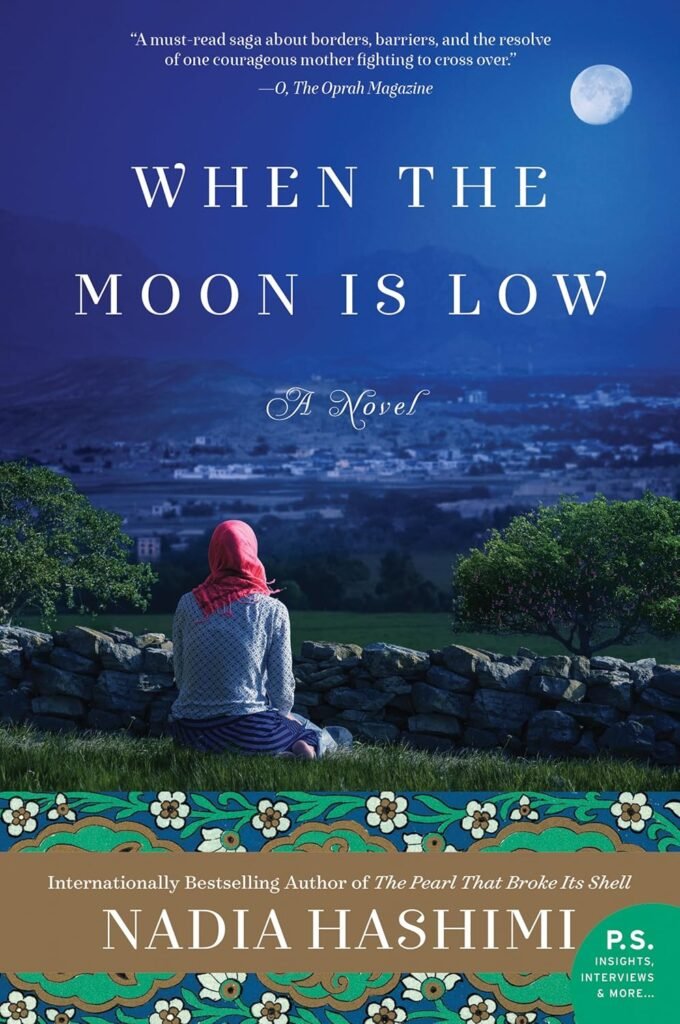
Nadia Hashimi’s When the Moon Is Low is a deeply moving novel that traces the harrowing journey of an Afghan family forced to flee their homeland in search of safety and a better life. Following Fereiba, a widow navigating the treacherous refugee routes of Europe with her children, the story unfolds with both urgency and tenderness, weaving between past and present to reveal how love, loss, and resilience shape a person’s will to survive.
Hashimi writes with quiet authority and emotional precision. Her portrayal of Fereiba is nuanced and deeply human — a woman shaped by tradition yet compelled by maternal courage to cross borders, seas, and languages she does not know. The novel captures the refugee experience without reducing its characters to symbols of suffering; they remain fully realized, flawed, and dignified throughout.
Particularly affecting is the subplot following Fereiba’s teenage son Saleem, whose separation from his family adds another layer of tension and emotional depth. Hashimi balances these dual narratives skillfully, allowing each thread to illuminate the other.
For readers of Khaled Hosseini or Atiq Rahimi, this novel will feel both familiar in its Afghan cultural grounding and refreshingly focused on the female experience. When the Moon Is Low is a compassionate, carefully crafted work that lingers long after the final page — a testament to the enduring human need for belonging.